Kitchens and wallpaper seem like a bad combination. All that steam from boiling pasta. Grease splattering from the pan. Mysterious sauces that somehow end up on walls three feet from the stove.
Yet people have been using wallpaper in kitchens for decades. Some of it survives beautifully. Some of it peels and stains within months.
The difference isn't luck. It's material choice, placement, and realistic expectations.
The Moisture and Steam Problem
Kitchens produce humidity. Every time you boil water, steam rises. It condenses on cool surfaces — windows, walls, cabinets. Over time, this moisture penetrates porous materials.
Traditional paper-based wallpaper absorbs moisture. The paper fibers swell, the adhesive weakens, edges start to lift. Eventually, you get peeling and bubbling. In extreme cases, mold grows behind the paper where you can't see it.
This is why people assume all wallpaper fails in kitchens. They're thinking of the wrong kind.
Vinyl Wallpaper: The Kitchen-Friendly Option
Vinyl wallpaper changes the equation.
True vinyl wallpaper has a plastic coating over the decorative layer. This creates a moisture barrier. Steam hits the surface and rolls off instead of soaking in. Grease wipes away instead of staining permanently.
There are two main types:
Solid vinyl. The entire wallpaper is vinyl, top to bottom. Most durable, most moisture-resistant, easiest to clean. Slightly less variety in textures and finishes.
Vinyl-coated. Paper or fabric base with a vinyl coating on top. More texture options, still moisture-resistant on the surface. Less forgiving if moisture gets behind it.
For kitchens, solid vinyl is the safer choice. It handles the environment without extra precautions.
Where to Use Kitchen Wallpaper (And Where Not To)
Not all kitchen walls face the same conditions. Behind the stove is different from the wall by the dining nook.
Safe zones:
Walls away from direct heat and water. The wall behind a breakfast table. The area above upper cabinets. Pantry interiors. These spots rarely see splashes or steam.
Feature walls that aren't near cooking areas. If your kitchen opens to a dining space, that transition wall is fair game.
Caution zones:
Near the sink, but not directly behind it. Moisture levels are higher, but vinyl handles occasional splashes fine.
Near the stove, but above the hood. Steam rises, but a good range hood captures most of it. The wall above isn't directly assaulted.
Avoid or protect:
Directly behind the stove as a backsplash. Heat is the enemy here, not just moisture. Even vinyl wallpaper can discolor or warp from direct heat exposure.
Directly behind the sink where water splashes constantly. Possible with solid vinyl, but tile or glass is more practical.
If you want wallpaper in these high-risk areas, consider covering it with a clear glass panel. You get the pattern you want with proper protection.
Cleaning and Maintenance
Kitchen walls get dirty. Grease particles float in the air and settle on every surface. Tomato sauce splatters. Fingers leave marks.
Vinyl wallpaper handles this. Here's the maintenance reality:
Regular dusting. Once a month, wipe walls with a dry microfiber cloth. Grease particles build up gradually; regular dusting prevents sticky residue.
Spot cleaning. Mild dish soap mixed with warm water. Wipe the stain gently with a soft cloth. Avoid abrasive scrubbers that can damage the vinyl surface.
Deep cleaning. Once or twice a year, wipe the entire papered area with a damp cloth and mild cleaner. Pay attention to areas near cooking zones.
What to avoid:
Harsh chemicals. Bleach, ammonia, and strong solvents can discolor or degrade vinyl.
Excessive water. Vinyl resists moisture, but soaking the seams can still cause problems. Damp, not wet.
Abrasive tools. Steel wool and rough scrubbers scratch the surface, making it harder to clean next time.
Tile-Look Alternatives
Some people want wallpaper that mimics tile for the backsplash area. This exists, but comes with caveats.
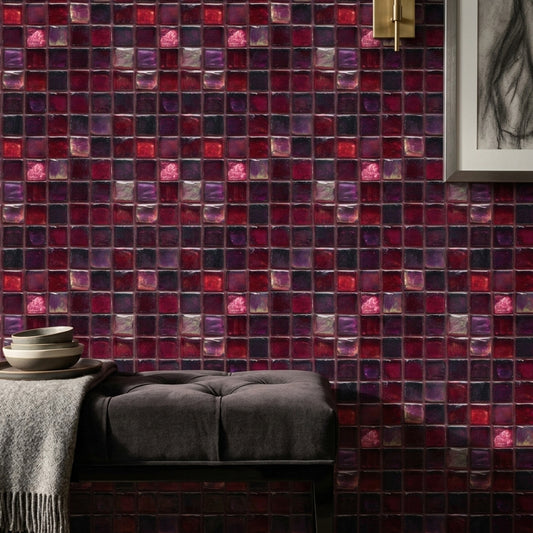
Tile-look wallpaper can be convincing from a distance. Up close, the lack of dimension gives it away. Tiles are three-dimensional; wallpaper is flat.
More importantly, the performance gap remains. Real tile handles heat and water without question. Tile-look wallpaper is still wallpaper — it has the same limitations as any vinyl product.
If you want the look of patterned tile without the installation cost, consider peel-and-stick tile sheets instead. These are actual dimensional products, not printed patterns. They handle kitchen conditions better than wallpaper and install nearly as easily.
Ventilation Matters More Than You Think
The biggest factor in kitchen wallpaper success isn't the wallpaper itself. It's your ventilation.
A kitchen with a powerful range hood that vents outside can handle wallpaper almost anywhere. Most steam and grease particles get sucked out before they reach the walls.
A kitchen with no hood, or a recirculating hood that just filters air instead of venting it, accumulates more moisture and grease. Wallpaper in these kitchens works harder and ages faster.
If you're planning kitchen wallpaper, evaluate your ventilation first. A hood upgrade might be worth considering before you invest in wall covering.
Popular Kitchen Wallpaper Patterns
What works aesthetically in a kitchen?
Subtle textures. Linen-look, grasscloth-look, subtle geometrics. These add interest without overwhelming a space that's already visually busy with appliances, countertops, and open shelving.
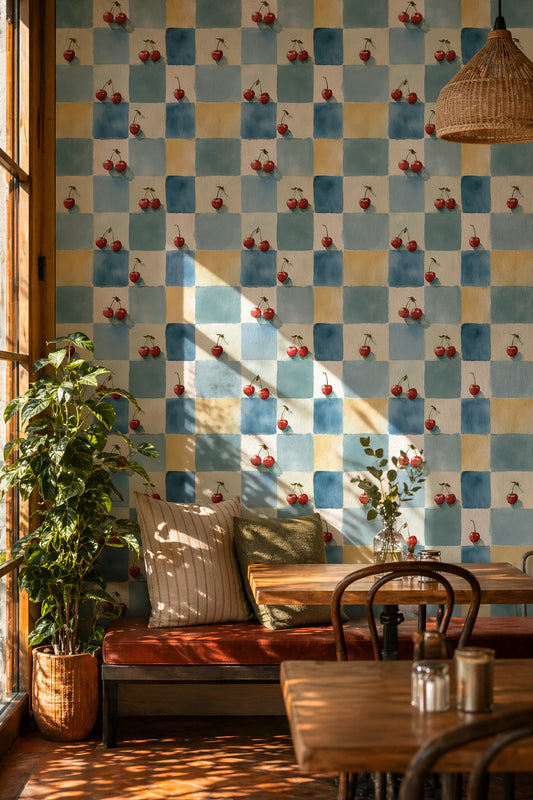
Small-scale patterns. Delicate florals, tiny geometrics, minimal prints. Kitchens have a lot going on; small patterns don't compete for attention.
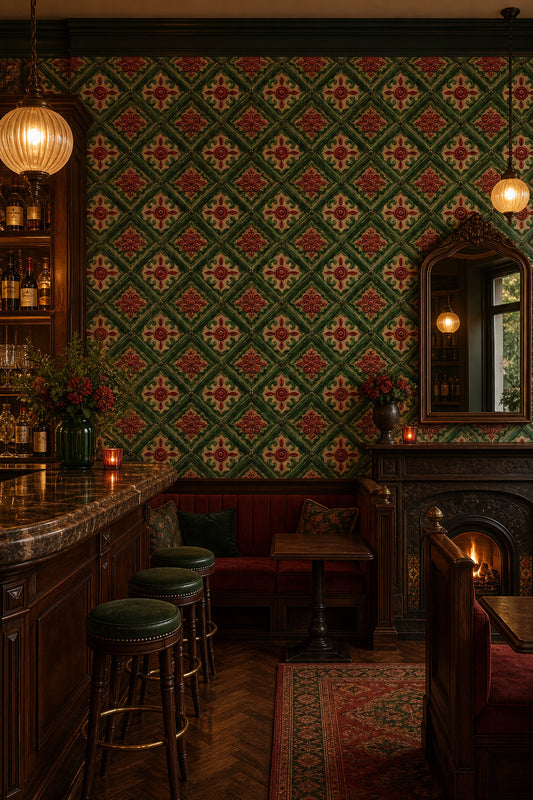
Bold patterns on one wall. If you want drama, concentrate it. A strong pattern behind open shelving or on a feature wall makes impact without chaos.
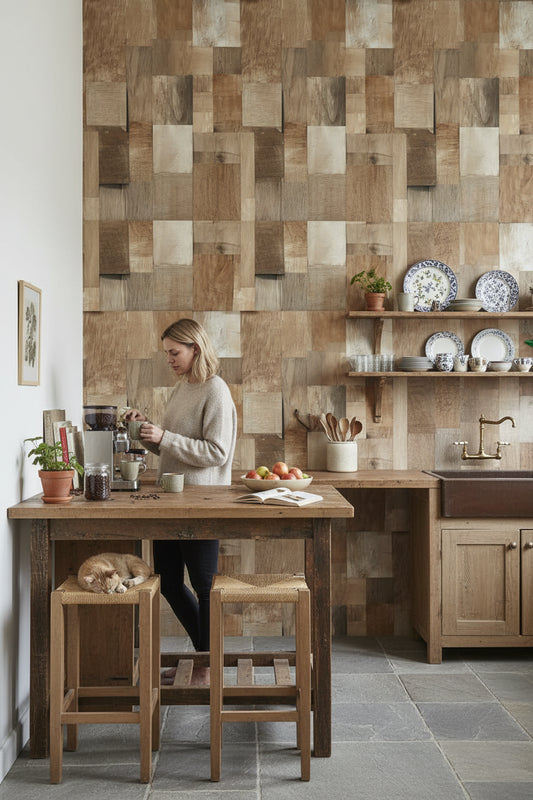
Faux finishes. Marble-look, concrete-look, weathered wood-look. These give texture and interest without pattern. They work well in modern kitchens where pattern might feel out of place.
What often fails: very large repeats in small kitchens, dark colors in spaces with limited light, patterns that clash with busy countertops or backsplashes.
Installation Tips for Kitchen Wallpaper
Installing wallpaper in kitchens requires extra care:
Seal the edges. Use a clear, waterproof edge sealer along seams and where wallpaper meets cabinets, countertops, or trim. This prevents moisture from getting behind the paper.
Prime properly. Kitchen walls often have residual grease even after cleaning. Use a quality primer designed for high-humidity areas.
Consider professionals. Kitchen wallpaper installation is less forgiving than bedrooms. Corners, outlets, and around cabinets — there's more complexity. If you're not confident, hiring help is worth the cost.
Buy extra. Keep a roll or two in storage. If damage happens years later, matching patterns from the same dye lot is nearly impossible.
Kitchens can absolutely have wallpaper. The key is matching the material to the conditions and being realistic about placement. The right vinyl pattern, in the right spot, with proper ventilation — it works. Cheap paper wallpaper behind an unvented stove — that's where the horror stories come from.