


Mention floral wallpaper and people picture two things: grandma's house or a bed and breakfast that hasn't been updated since 1987.
Fair enough. Floral patterns carry baggage. They've been associated with fussy, cluttered, old-fashioned interiors for decades. But here's the thing — florals never actually went away. They just evolved.
The question isn't whether floral wallpaper works in a living room. It's whether you're using the right kind.
A Brief History of Floral Wallpaper
Florals have been on walls for centuries. William Morris made them iconic in the Victorian era — intricate, dense, nature-inspired patterns that covered everything.
Then came the 1970s and 80s. Smaller prints. Pastel colors. Laura Ashley everywhere. Florals became associated with a specific, country-cottage aesthetic. Cozy to some. Suffocating to others.
By the 90s and 2000s, minimalism took over. Clean walls. Solid colors. Florals became shorthand for "dated."
But design is cyclical. What was rejected returns in new forms. The florals coming back now aren't your grandmother's patterns — though some of her patterns are coming back too, recontextualized.
Modern Floral vs. Traditional Floral
Traditional florals are dense. Roses, peonies, intricate leaves. Repeating patterns where every inch of paper is covered. Usually on light backgrounds — creams, pale pinks, soft greens.
Modern florals do things differently.
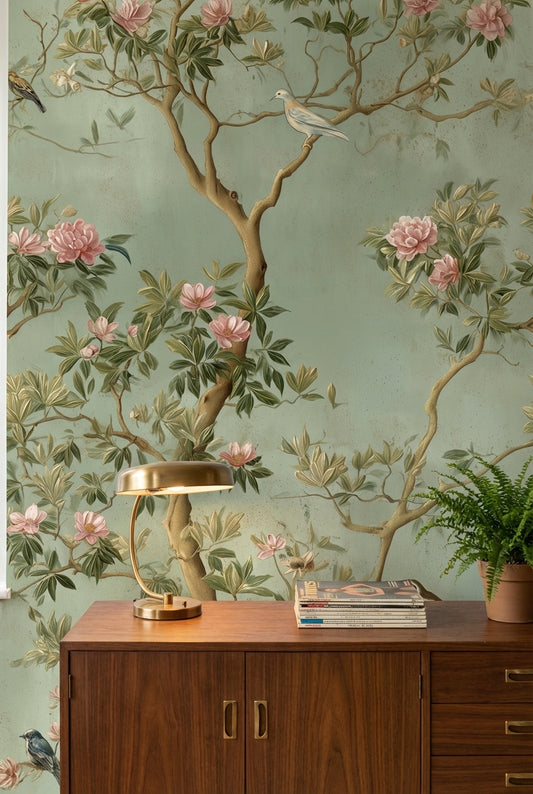
Scale changes. Contemporary patterns often use oversized blooms — a single flower might span two feet. This reads as art, not fabric.
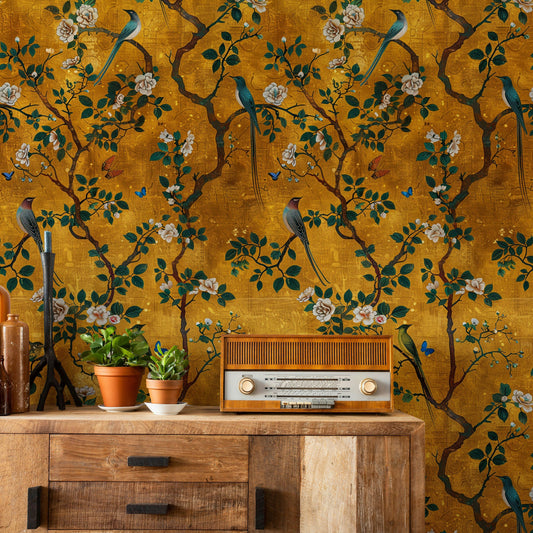
Backgrounds shift. Dark backgrounds — navy, charcoal, black, deep green — give florals drama. The same flowers that look quaint on cream look sophisticated on midnight blue.
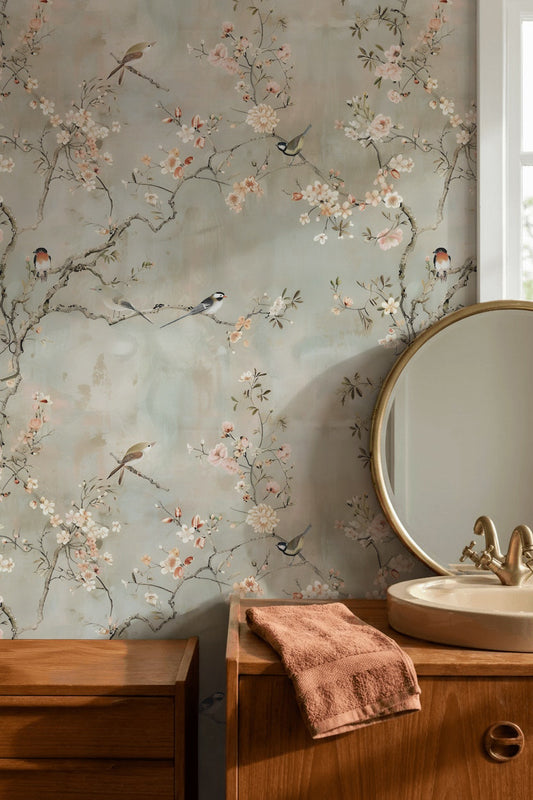
Color palettes update. Muted, desaturated tones replace the bright pinks and reds. Dusty rose instead of hot pink. Sage instead of kelly green. These feel current without trying too hard.
Abstraction enters. Watercolor florals, loose brushstrokes, botanical silhouettes. Not every petal needs to be defined. Suggestion works better than precision.
Which Living Room Styles Work with Florals
Not every room can pull off flowers on the walls. Here's where they make sense:
Traditional and transitional spaces. Obviously. If your living room already has classic furniture, crown molding, and rich textures, florals are a natural fit. Just update the pattern itself.
Bohemian interiors. Florals love the layered, collected look. Mixed patterns, global influences, natural materials — botanical wallpaper ties it all together.
Modern eclectic. A bold floral mural behind a mid-century sofa creates tension in a good way. The contrast between clean-lined furniture and organic patterns works when done intentionally.
Maximalist spaces. If you're already mixing colors, textures, and patterns, florals are just another layer. They thrive in rooms that embrace "more."
Where florals struggle: stark minimalist spaces, industrial lofts, very masculine aesthetics. Not impossible, but harder to pull off.
How to Avoid Looking Like a Hotel Lobby
The hotel lobby problem comes from a few specific mistakes:
Using florals everywhere. Wall to wall, floor to ceiling, on every surface. This overwhelms. One wall is enough. An accent, not a blanket.
Matching too precisely. When the wallpaper, curtains, throw pillows, and rug all have the same floral print, the room feels like a catalog from 1994. Mix your patterns. Let the wallpaper be the star; everything else should complement, not copy.
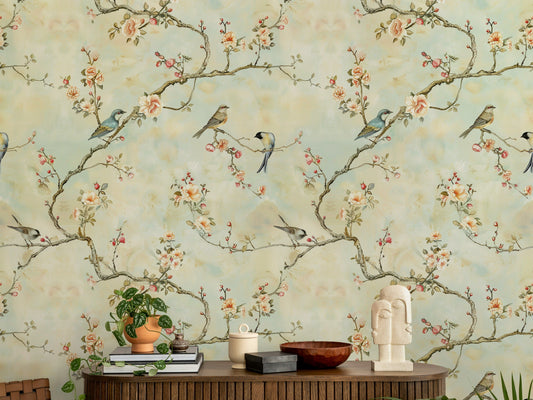
Choosing faded or washed-out versions. Some "vintage" florals just look tired. There's a difference between a soft color palette and colors that look like they've been in the sun for thirty years.
Ignoring the rest of the room. Floral wallpaper on walls surrounded by dated furniture, brass fixtures, and wall-to-wall carpet will look dated regardless of the pattern. The wallpaper needs context.
Trending Floral Patterns Right Now
Dark botanical. Black or deep navy backgrounds with realistic or painterly flowers. Moody, dramatic, sophisticated. Works surprisingly well in living rooms with good lighting.
Oversized blooms. Single flowers scaled up to mural proportions. More art installation than traditional wallpaper. Best on one wall.
Watercolor abstracts. Loose, flowing, impressionistic. The flowers are suggested rather than detailed. Soft and contemporary.
Tropical and botanical leaves. Not technically florals, but in the same family. Monstera, palms, ferns. Still popular, though possibly peaking.
Vintage revivals. Actual William Morris patterns and their descendants. These work when the room commits to the aesthetic fully — not as a quirky accent in an otherwise modern space.
The Furniture and Color Question
Floral wallpaper demands careful coordination. Here's the simple approach:
Pull one or two colors from the pattern for your furniture and accessories. Not the dominant flower color — usually a background tone or leaf shade works better. This creates cohesion without matching.
Keep large furniture pieces solid. A floral sofa plus floral walls is too much. Let the walls carry the pattern; upholstery should be simple.
Add texture, not more pattern. Linen, velvet, leather, natural wood. These ground the room and prevent it from feeling flat or busy.
Metallics work as accents. Brass, gold, or copper fixtures can warm up floral spaces without competing for attention.
Is Floral Wallpaper Right for Your Living Room?
Ask yourself these questions:
Do you actually like florals, or are you trying to be trendy? Trends pass. Wallpaper is hard to change. Don't install something you'll resent in two years.
Does your space have enough light? Dark florals in dim rooms can feel oppressive. Light florals in bright rooms can wash out. Match the pattern to your conditions.
Are you willing to commit? A floral accent wall isn't a subtle choice. It becomes the room's focal point. Everything else needs to support it.
What's the longevity? Classic patterns — William Morris, timeless botanicals — tend to age better than whatever's trending on Instagram this season. If you want lasting design, lean traditional. If you're comfortable updating in five years, go bold.
Floral wallpaper isn't outdated. Bad floral wallpaper is outdated. The pattern itself is just a tool. Use it well, and your living room becomes memorable. Use it carelessly, and yes — it'll look like that hotel lobby.
1 comment
I love wall paper!