Your room feels cramped. The walls are closing in. You've tried everything — decluttering, smaller furniture, mirrors. But here's something most people overlook: the wallpaper on your walls might be working against you.
The right wallpaper doesn't just decorate a room. It reshapes how your brain perceives space. Get it wrong, and even a decent-sized room feels like a closet. Get it right, and that tiny bedroom suddenly breathes.
Why Small Rooms Feel Cramped (It's Not Just the Size)
Square footage is one thing. Perceived space is another.
Dark colors absorb light. Busy patterns create visual noise. Horizontal elements make walls feel shorter. These aren't design opinions — they're how human vision works.
Your brain processes visual information before you consciously register it. When a room has too many competing elements, your mind reads it as cluttered, tight, uncomfortable. Even if the room is technically spacious.
Light Colors vs. Patterns: What Actually Works
The conventional advice says "paint it white." And yes, light colors reflect more light, making surfaces appear to recede. But plain white walls can feel sterile, institutional.
Wallpaper gives you options that paint can't.
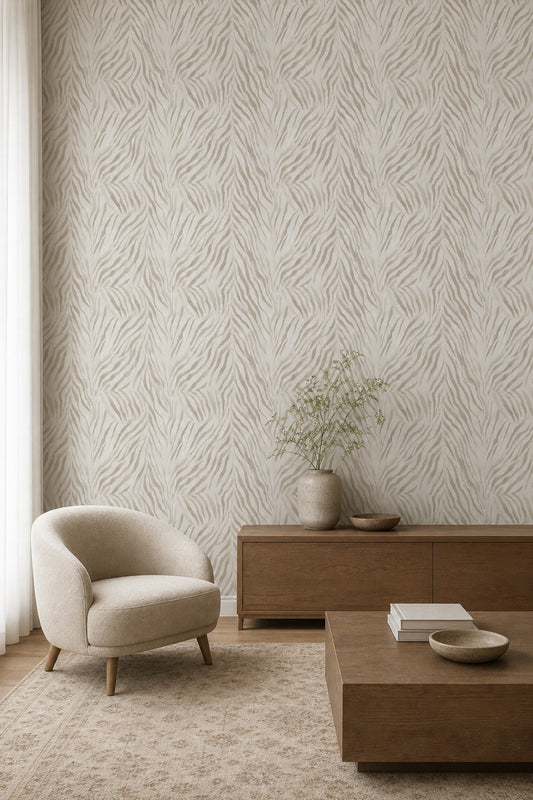
Subtle patterns in light tones — soft geometrics, gentle textures, muted botanicals — add visual interest without overwhelming the space. The key word is subtle. You want something that reads as "texture" from a distance, not "pattern."
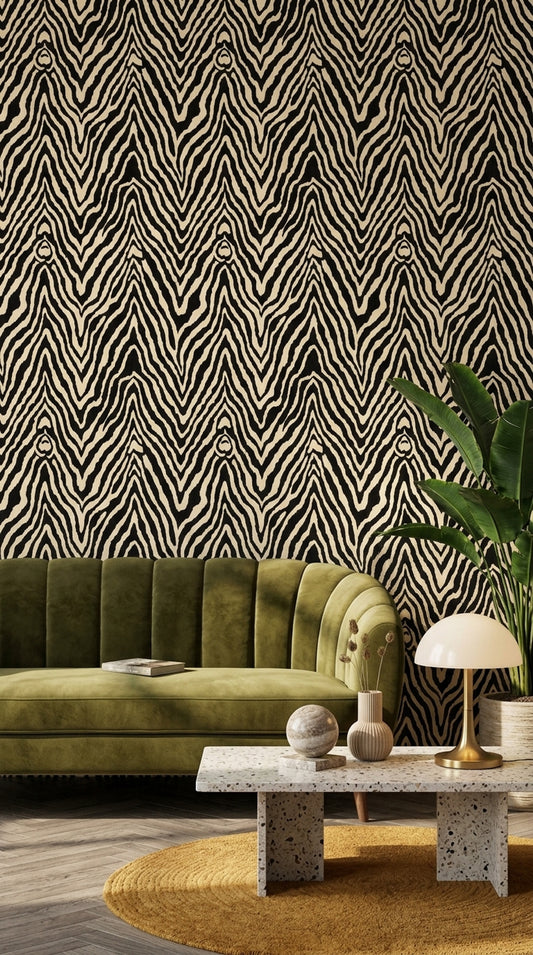
Avoid anything with high contrast. A white background with bold black shapes will make the room feel busier, not bigger.
Vertical Stripes and the Ceiling Height Trick
This one actually works, and it's not just an old decorator's tale.
Vertical lines draw the eye upward. When your gaze travels up instead of across, the ceiling feels higher. Higher ceilings mean more perceived volume. More volume means the room feels larger.
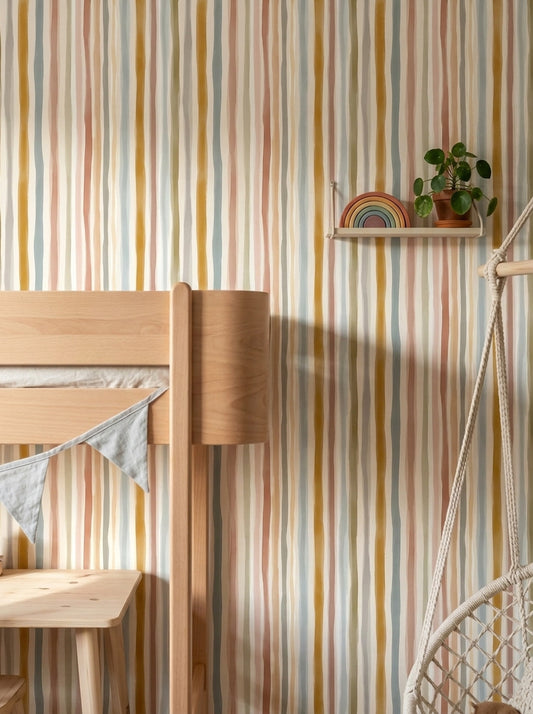
You don't need obvious stripes. Subtle vertical textures — linen effects, watercolor washes, delicate botanical stems growing upward — achieve the same effect without looking like a circus tent.
The stripe width matters too. Narrow stripes work better in small rooms. Wide stripes can have the opposite effect, making walls feel chunky and heavy.
Patterns That Shrink Your Room (Avoid These)
Large-scale florals. Bold geometrics. Anything with a repeat larger than 12 inches.
These patterns demand attention. Your eye jumps from motif to motif, constantly measuring the wall. The more your brain has to process, the more aware you become of the room's boundaries.
Dark backgrounds are the worst offenders. A navy blue wallpaper with gold accents might look stunning in a showroom, but in your 10x10 bedroom, it'll feel like sleeping in a velvet box.
Also watch out for metallic finishes in small spaces. They reflect light unpredictably, creating visual chaos that makes walls feel closer.
Real Examples: Before and After
A 9x10 bedroom with dark gray walls and a busy gallery wall felt oppressive. Switching to a pale sage wallpaper with a subtle leaf texture — vertical orientation — made the room feel nearly 30% larger. The homeowner didn't change anything else.
A narrow hallway with cream paint felt like a tunnel. A light wallpaper with soft vertical watercolor strokes transformed it into something that felt intentional, almost gallery-like.
The pattern in both cases was barely noticeable from five feet away. That's the sweet spot.
Choosing the Right Wallpaper for Your Small Room
Start with the lightest tone you can tolerate. Not clinical white — something warm. Soft cream, pale gray, muted sage, dusty pink.
Look for patterns with vertical movement. Even abstract designs tend to have a directional flow — make sure it goes up, not across.
Keep the scale small. If you can see the pattern repeat from across the room, it's probably too big.
Test before committing. Order samples. Tape them to the wall. Live with them for a few days. What looks perfect on a screen often reads completely different on an actual wall.
And remember: the goal isn't to hide the room's size. It's to make the size feel intentional, comfortable, designed. The right wallpaper doesn't fool anyone into thinking your small room is large. It just makes them stop noticing the square footage altogether.