

In an eat-in kitchen, Kitchen Wall Murals make the strongest impact on the wall behind a round oak pedestal table or along the banquette wall beside shaker c...
Kitchen Wall Murals
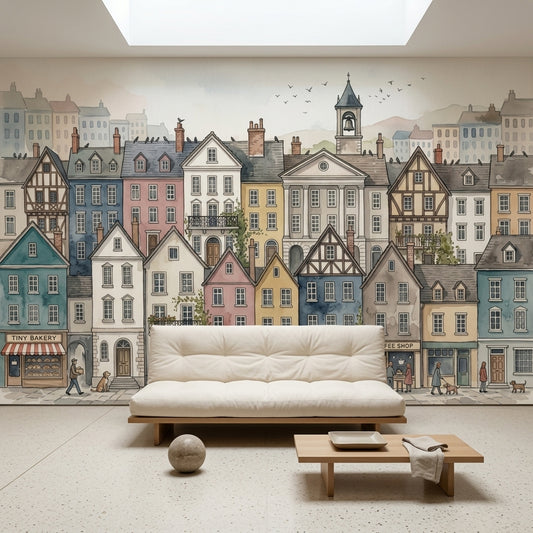
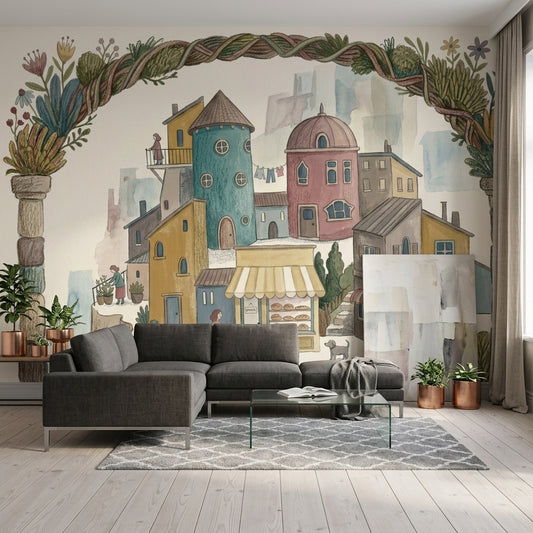
In an eat-in kitchen, Kitchen Wall Murals make the strongest impact on the wall behind a round oak pedestal table or along the banquette wall beside shaker cabinets. The scale suits rooms with matte white cupboards, brushed brass handles, and black spindle chairs, where the mural can pull together cream stone counters, walnut shelving, and olive or terracotta accessories without breaking the line of the cabinetry. We often pair kitchen wall murals with painted base units in warm greige or muted sage, especially when you want wall murals for a kitchen that feel tied to the joinery rather than floating above it. For spaces that need more color movement across open shelving and breakfast seating, our Multicolor Wall Murals offer a strong companion direction.
How Kitchen Wall Murals Balance Tile-Like Detail, Wood Grain, And Warm Undertones
Kitchen Wall Murals stand out through layered ochre, clay, cream, charcoal, and weathered green undertones that read clearly against butcher-block islands and ribbed wood bar stools. Some clients come to this look through kitchen wall murals tile references or hand painted kitchen wall murals, but the appeal is often the mix of brushed, plaster-like texture and structured pattern that sits neatly with off-white subway tile, smoked oak dining benches, and iron-framed cafe chairs. If your scheme already leans into timber cabinets or open shelving, our Wood Wall Murals connect naturally with the same material story. For a broader design direction that relates to wall murals kitchen schemes, our guide to Modern Wallpaper For Kitchen breaks down current layouts and finish pairings.
Where Kitchen Wall Murals Work in an Eat-In Kitchen and Breakfast Nook
Place Kitchen Wall Murals on the full dining wall opposite tall pantry units, on the short return wall beside a window seat, or above wainscoting behind a built-in breakfast bench where wall murals for kitchen need a clear viewing angle from the table. In narrower layouts, wall murals for a kitchen read cleanly at the end wall beyond the island, especially with a marble-topped tulip table and two upholstered dining chairs in rust or moss. If you prefer a wallpaper version for lower-profile pattern coverage, see Kitchen Wallpaper. For planning around splash zones, seating walls, and kitchen wall murals wallpaper layouts, our Wallpaper For Kitchen guide is a useful starting point. All Kitchen Wall Murals are available in custom sizes, use paste-the-wall installation, and ship worldwide.
-
wall mural
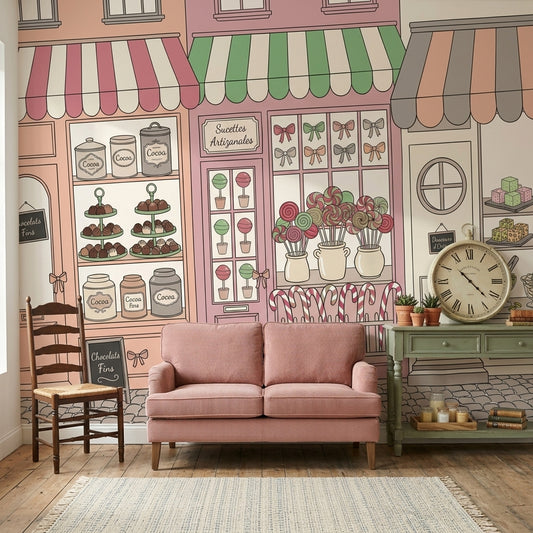
French Patisserie Wall Mural.
$3.72 / sq ft -
wall mural
Typography Wallpaper Pop
$3.72 / sq ft -
wall mural
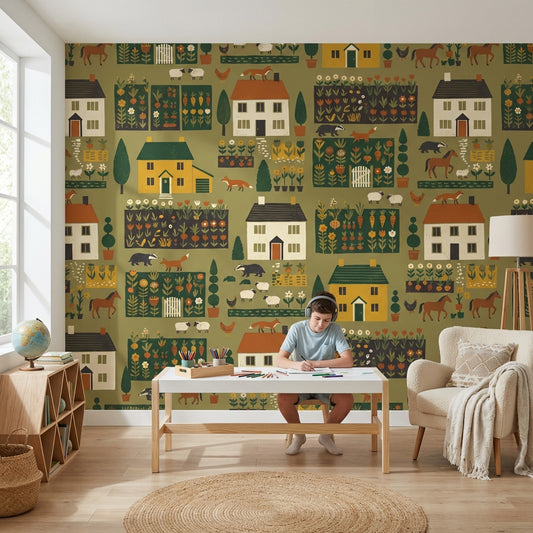
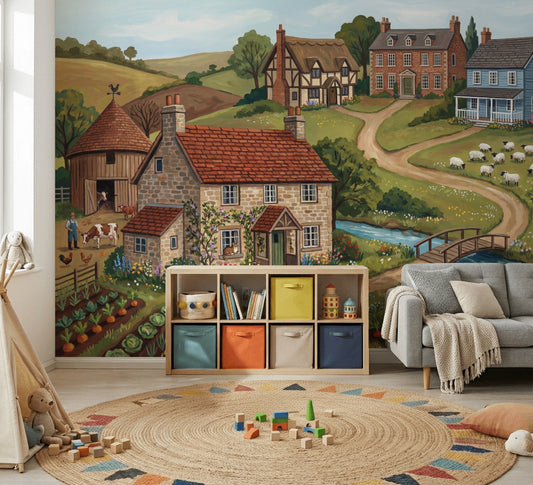
Countryside Wallpaper Farmhouse
$3.72 / sq ft








— NEED HELP?
Frequently asked questions.
Can't find what you're looking for? Our team replies within 4 working hours, Mon–Fri.
01 Can Kitchen Wall Murals be used in kitchens with humidity, steam, and occasional splashes?
Yes—Kitchen Wall Murals work well in kitchens as long as they’re placed away from direct splash zones like the sink run and cooktop wall. If you’re dealing with lots of steam, use them on a breakfast wall or dining nook wall and keep a 12–24 inch buffer from the countertop edge. For the most durable setup, pair the mural with a clear glass or acrylic panel behind the sink as a practical “kitchen wall murals tile” alternative that still reads like one continuous design.
02 How do I handle the splashback area—should Kitchen Wall Murals go behind the stove or sink?
It's not recommended to place Kitchen Wall Murals directly behind a gas range or right at the sink splashback; grease and constant wiping can wear the surface faster than you’ll enjoy it. Instead, stop the mural at the countertop line and finish the splash zone with a slab of quartz, a stainless sheet, or a clear glass guard so the artwork stays intact. This approach gives you the look of wall murals for a kitchen while keeping the “work wall” easy to clean.
03 How does custom sizing work for Kitchen Wall Murals when I have cabinets, a fridge, or a dining nook built-in?
For Kitchen Wall Murals, size to the visible wall area you want to feature—often that’s the section between a tall pantry cabinet and a doorway, or the open wall behind a banquette. Provide the full wall width and height, then note obstacles like uppers, a range hood, or open shelving so the main focal point (like a citrus cluster or “hand painted kitchen wall murals” look) lands in the clear area. In a dining nook, center the design on the table width (for example, a 60-inch table) so it reads intentional from the chair view.
04 Which kitchen wall works best for Kitchen Wall Murals, and where should I place them for the best effect?
The best spot for Kitchen Wall Murals is usually the wall you see from the entry or the dining nook wall—areas that aren’t interrupted by uppers, appliances, and outlets. In a galley kitchen, try the end wall to pull the eye down the corridor; in an open-plan kitchen, a banquette wall or the wall behind a coffee bar is ideal. For a bold option, a ceiling install above an island can mimic “3d wall murals for kitchen” depth without competing with cabinetry lines.
05 What furniture finishes and materials pair well with Kitchen Wall Murals in a working kitchen?
Kitchen Wall Murals pair especially well with matte white or greige cabinets, light oak shelves, and brushed brass or black pulls—these finishes keep the mural as the focal point without feeling busy. If you have a dining nook, try a walnut pedestal table with woven cane chairs and an oatmeal linen bench cushion to soften hard kitchen surfaces. For a more graphic look, combine a black metal bistro table with a mural featuring crisp lines—great for wall murals kitchen spaces with limited square footage.
06 Should I use Kitchen Wall Murals on one accent wall or wrap multiple walls, and how do I choose colors that won’t fight my cabinets?
In most kitchens, one accent wall is the sweet spot—especially if the mural has a large pattern—because cabinets and countertops already add visual structure. For small kitchens (under about 120 sq ft), choose lighter grounds like soft ivory, warm white, or pale sage; for larger kitchens, deeper shades like olive, terracotta, or ink blue can handle more coverage. If you’re searching “kitchen wall murals wallpaper,” note that these are wall murals for kitchen spaces—pair them with countertop tones like Calacatta-style white, charcoal soapstone, or light concrete so the palette stays controlled.