


On the wall behind a light oak crib in a north-facing nursery, Safari Animals Wall Murals read with warm sand, dry grass yellow, and muted clay undertones th...
Safari Animals Wall Murals
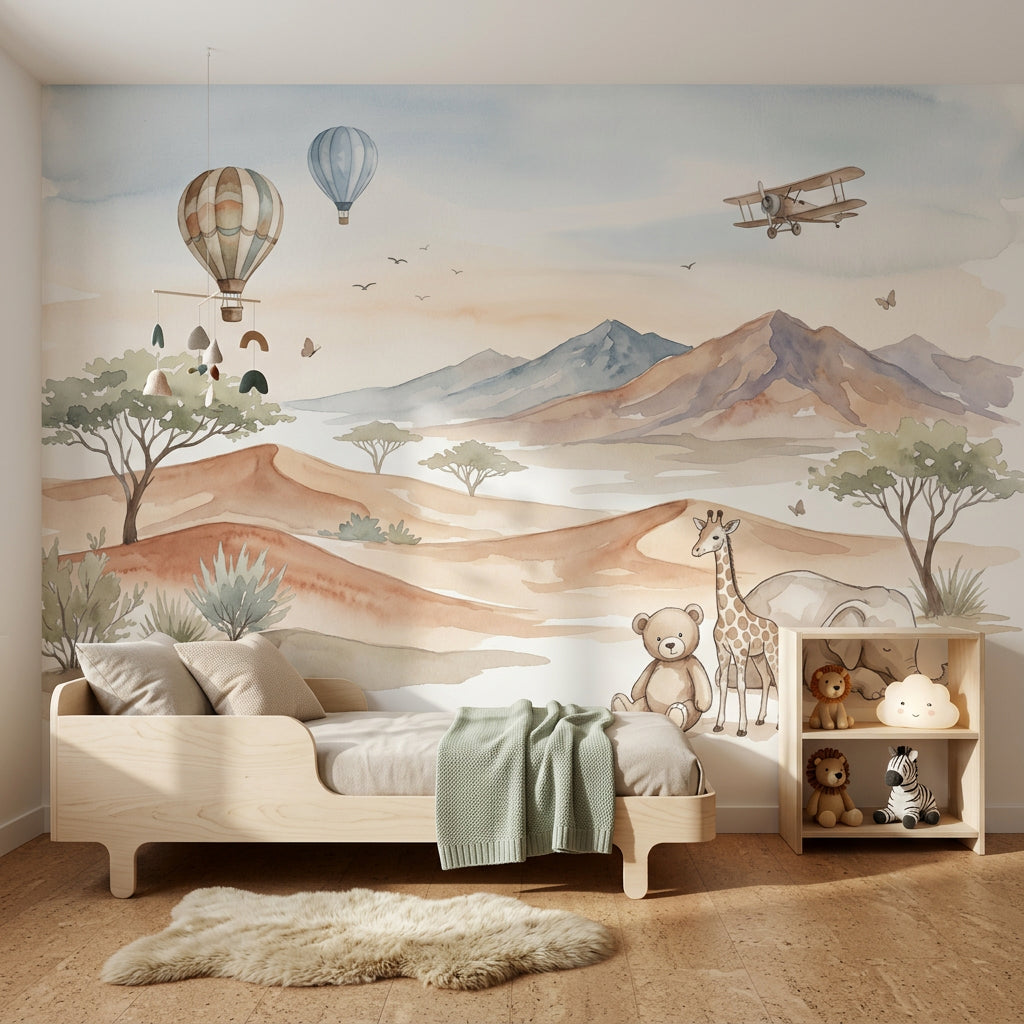
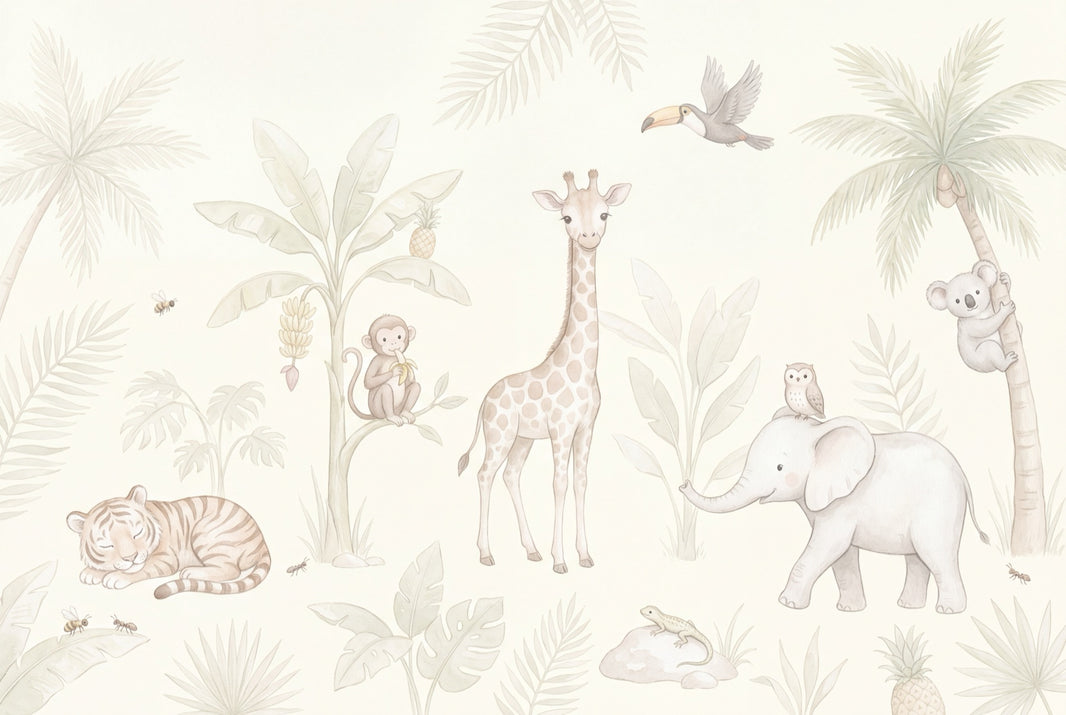
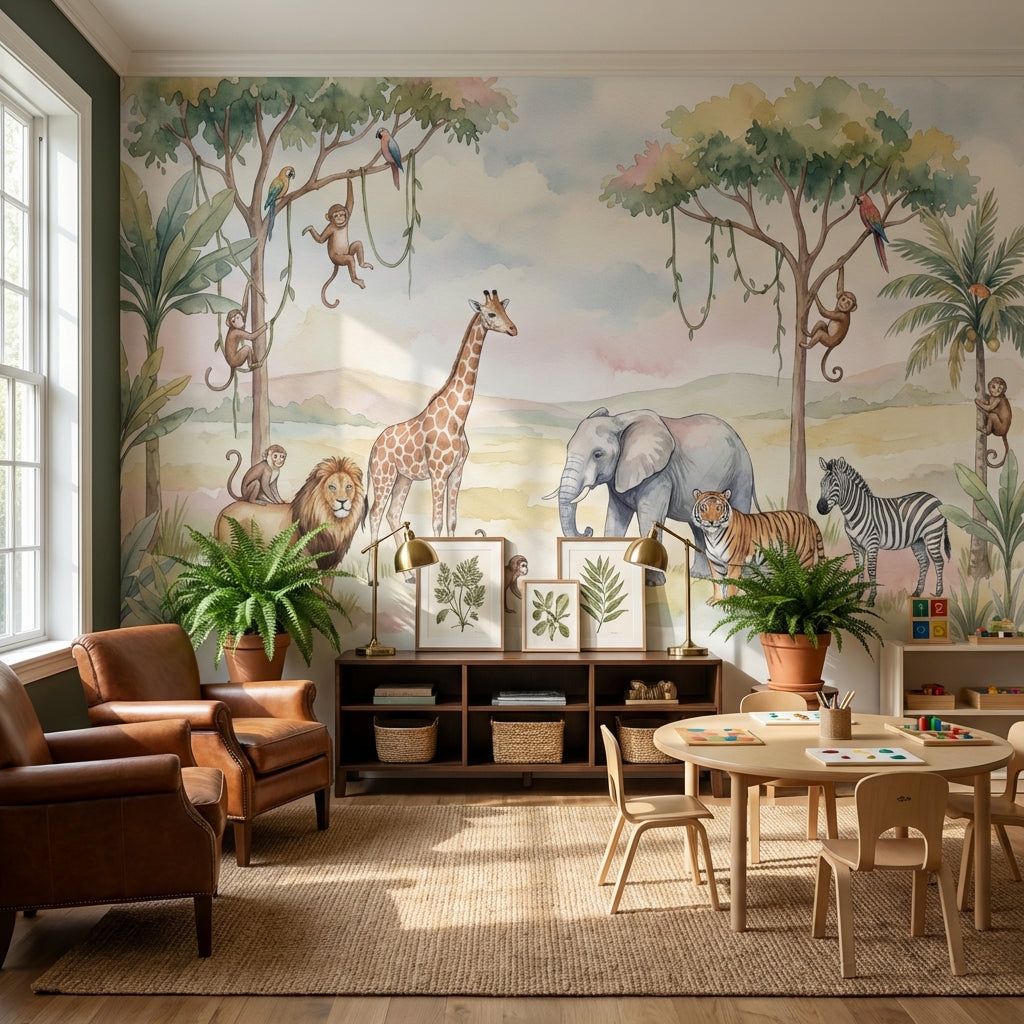
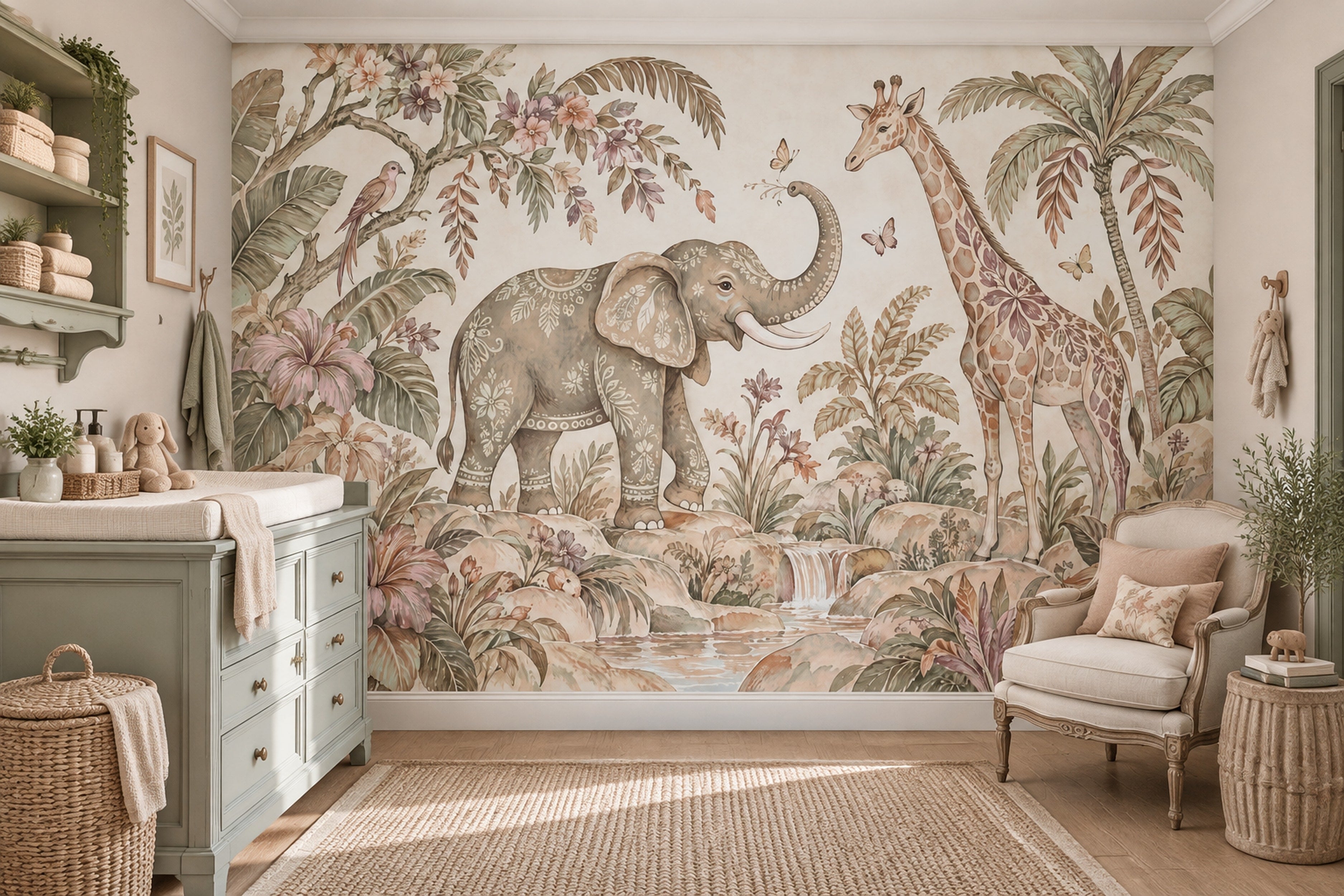
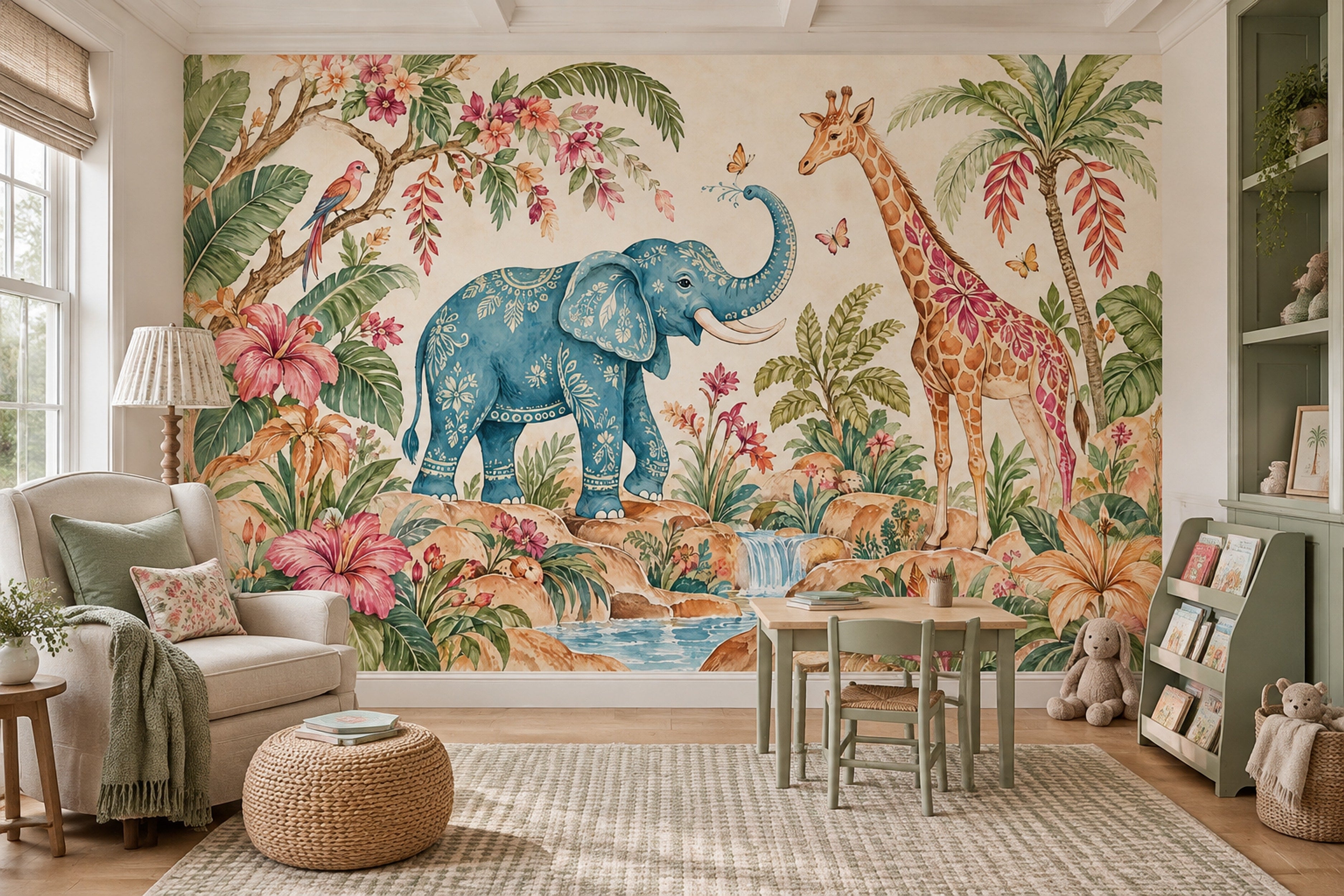
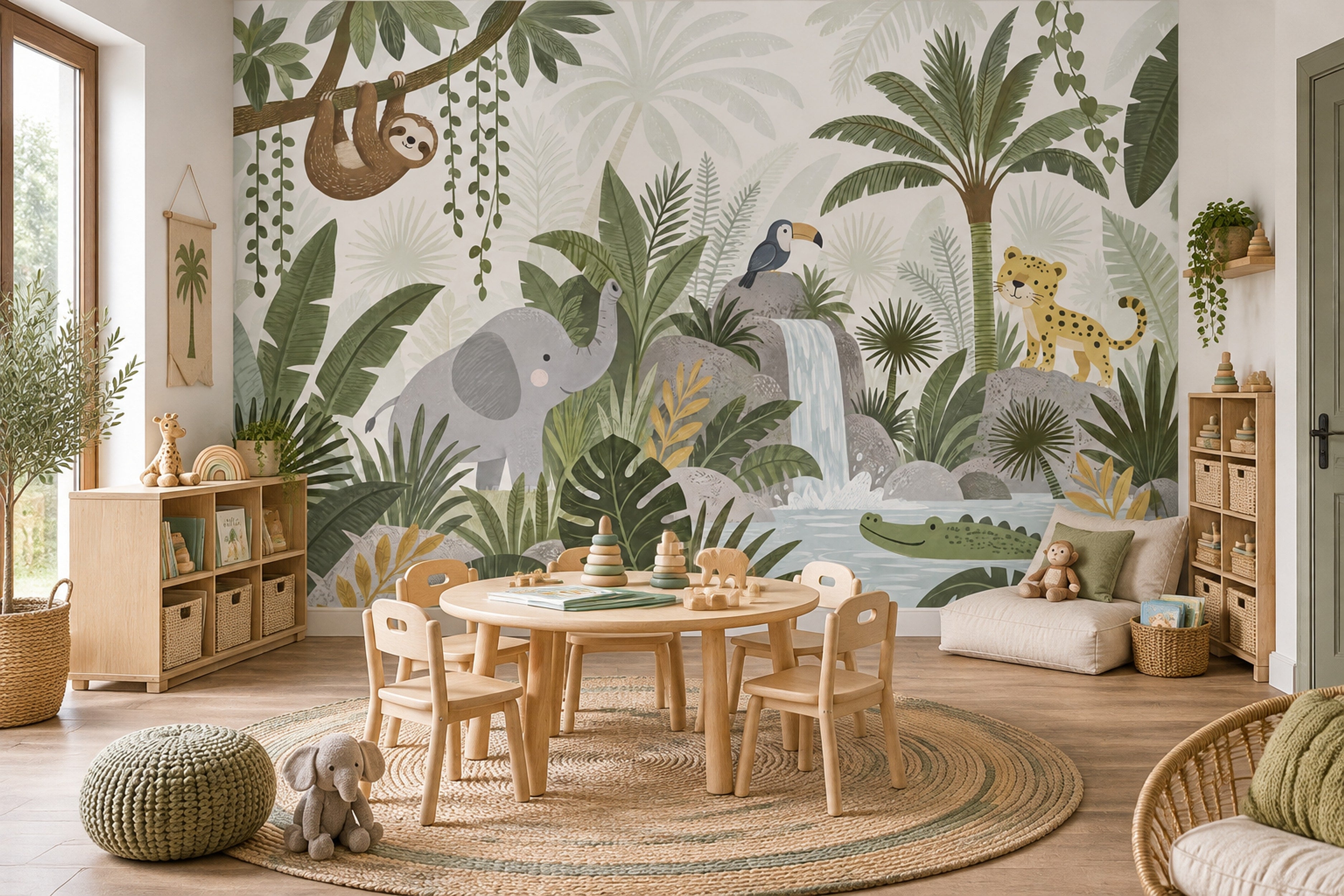
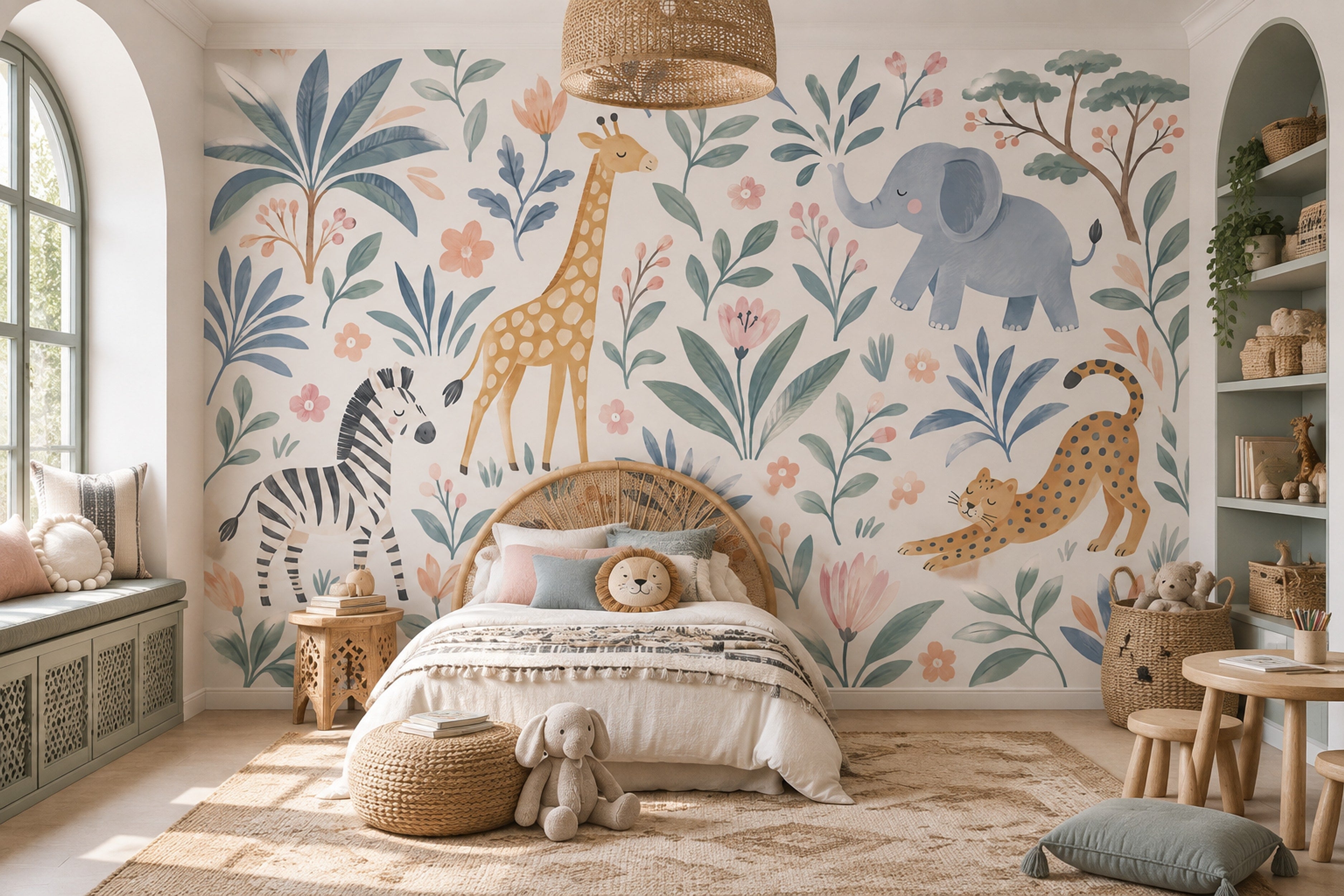
On the wall behind a light oak crib in a north-facing nursery, Safari Animals Wall Murals read with warm sand, dry grass yellow, and muted clay undertones that shift through the day. Morning light pulls out the pale beige ground and makes the illustrated animals feel airy, while lamplight in the evening deepens the tawny browns and olive detailing for a cozier look. This safari animals wall mural style works especially well when you want the room to feel playful but still pulled together, and if you are planning a larger family space with a similar palette, our Living Room Wall Murals offer related wall murals with the same grounded color direction.
How Safari Animals Wall Murals Read Through Ochre, Clay, and Olive Detail
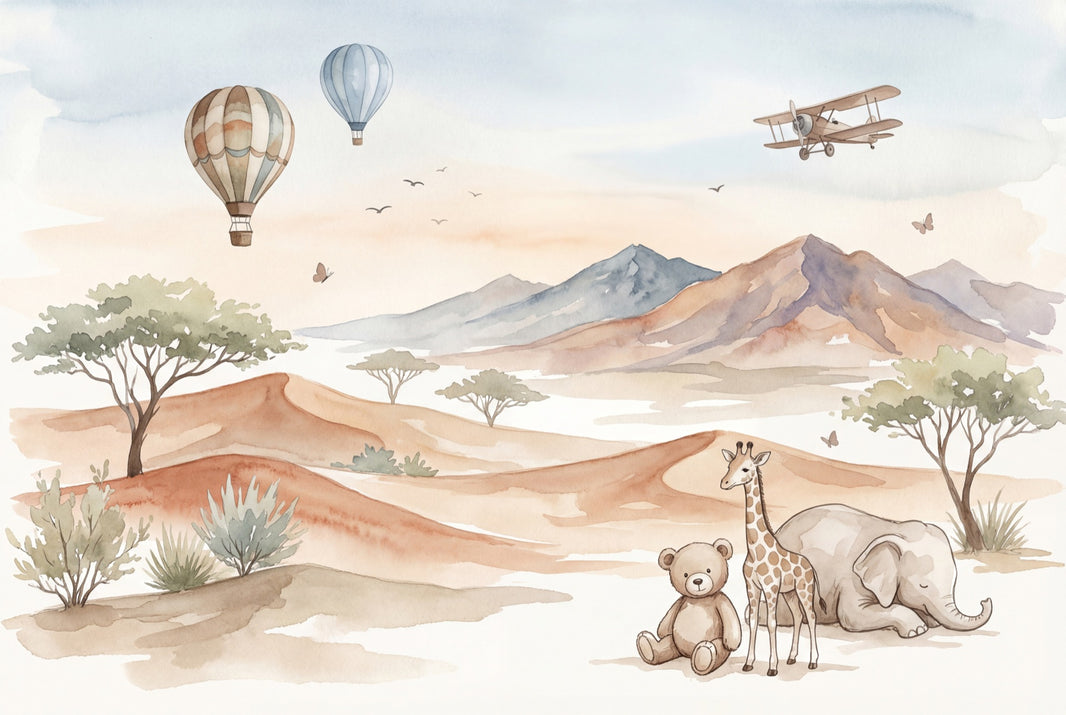
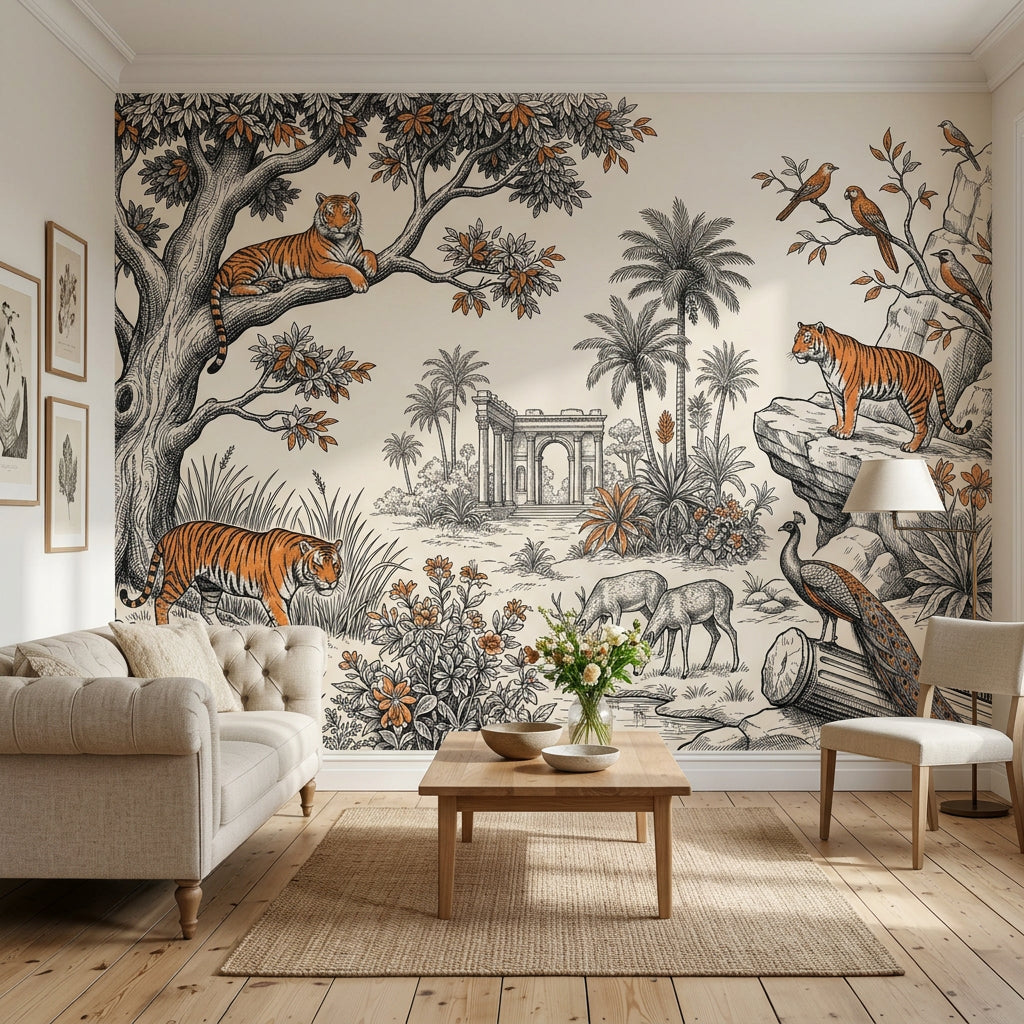
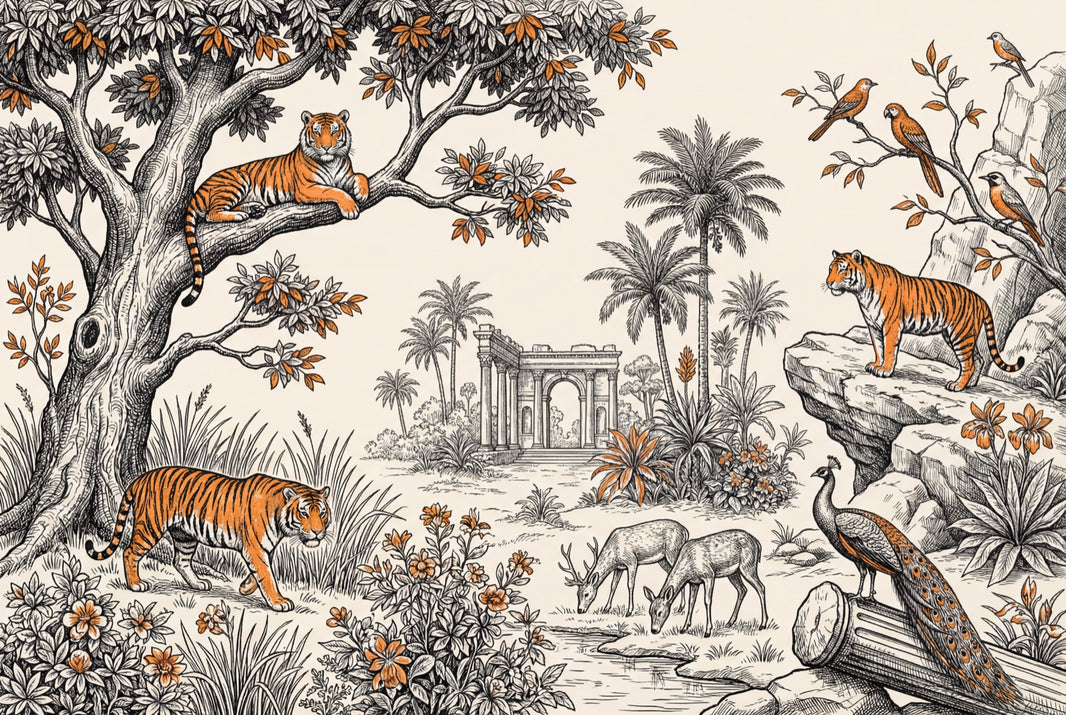
Safari Animals Wall Murals stand out for their hand-drawn animal forms, layered foliage, and brushed textures that soften the scale of the print across a full wall. We see these Safari Animals Wall Murals paired with camel leather gliders, a walnut dresser, and ivory boucle curtains, where the ochre and khaki notes feel settled rather than sugary. For rooms leaning warmer, the yellow-based accents connect naturally with our Yellow Wall Murals, especially if you are building around wheat linen bedding, a rattan pendant, and a painted dresser in putty or sage. These African safari wall murals and jungle safari wall murals have the scenic depth people often want from animals wall murals, but the linework keeps the wall readable from both close range and across the room.
Safari Animals Wall Murals in Nurseries and Bedrooms: Best Wall Positions
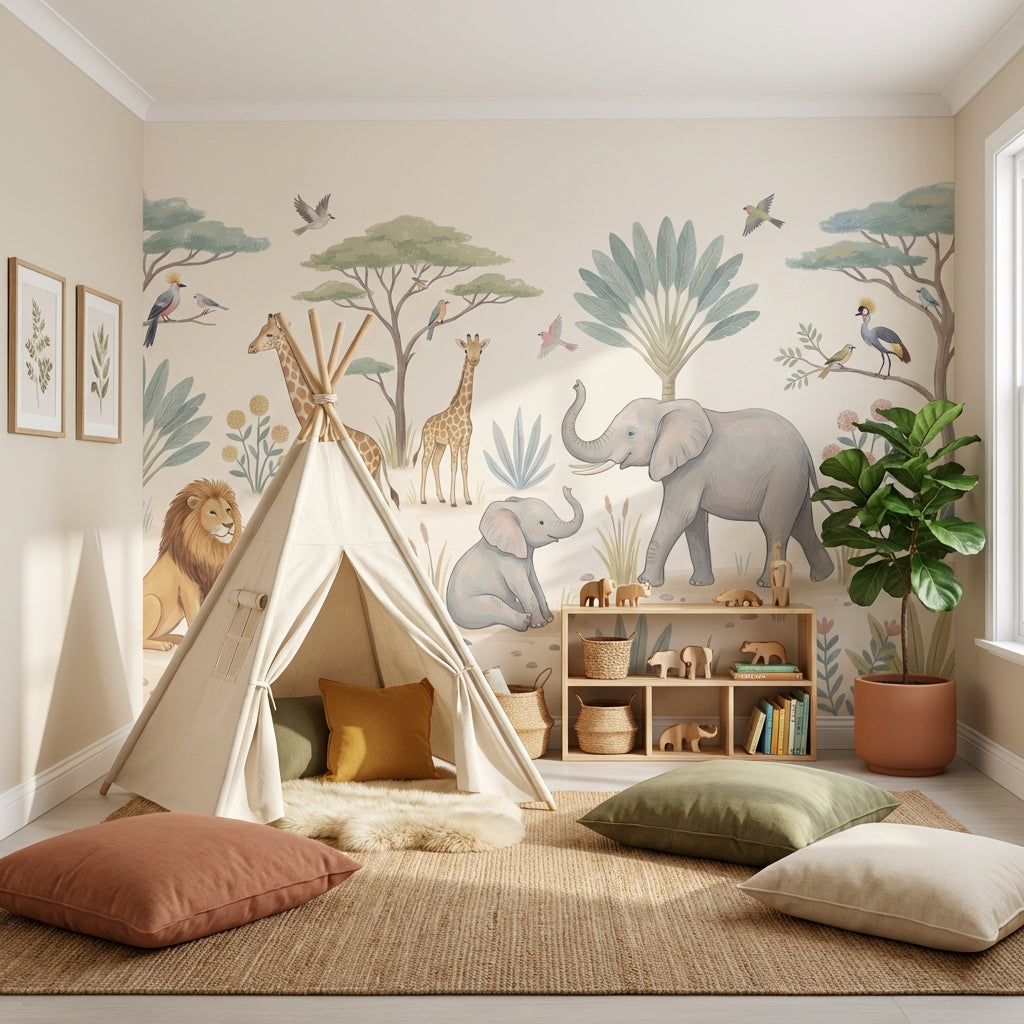
Safari Animals Wall Murals work particularly well on the full wall behind a crib, on the wall facing the doorway in a child’s bedroom, or behind a low sofa in a reading corner where the animal grouping can be seen in one sweep. For clients comparing mural and repeat-print options, see Safari Animals Wallpaper, which gives you the same theme in a wallpaper format suited to smaller wall sections. These safari wall murals for nursery settings are made in custom sizes, use a paste-the-wall install, and ship worldwide, so they are practical for anything from a single feature wall to wide safari themed wall murals in shared bedrooms. If you want more ideas on layering jungle safari animals wall mural looks with cane furniture, striped rugs, and leafy textiles, read Jungle Wallpaper Trends for Bold Interior Design.
-
wall mural
Muted Green
From $3.72 / sq ft -
wall mural
Hot Air
From $3.72 / sq ft -
wall mural
Toile Landscape
From $3.72 / sq ft -
wall mural
White Background
From $3.72 / sq ft -
wall mural
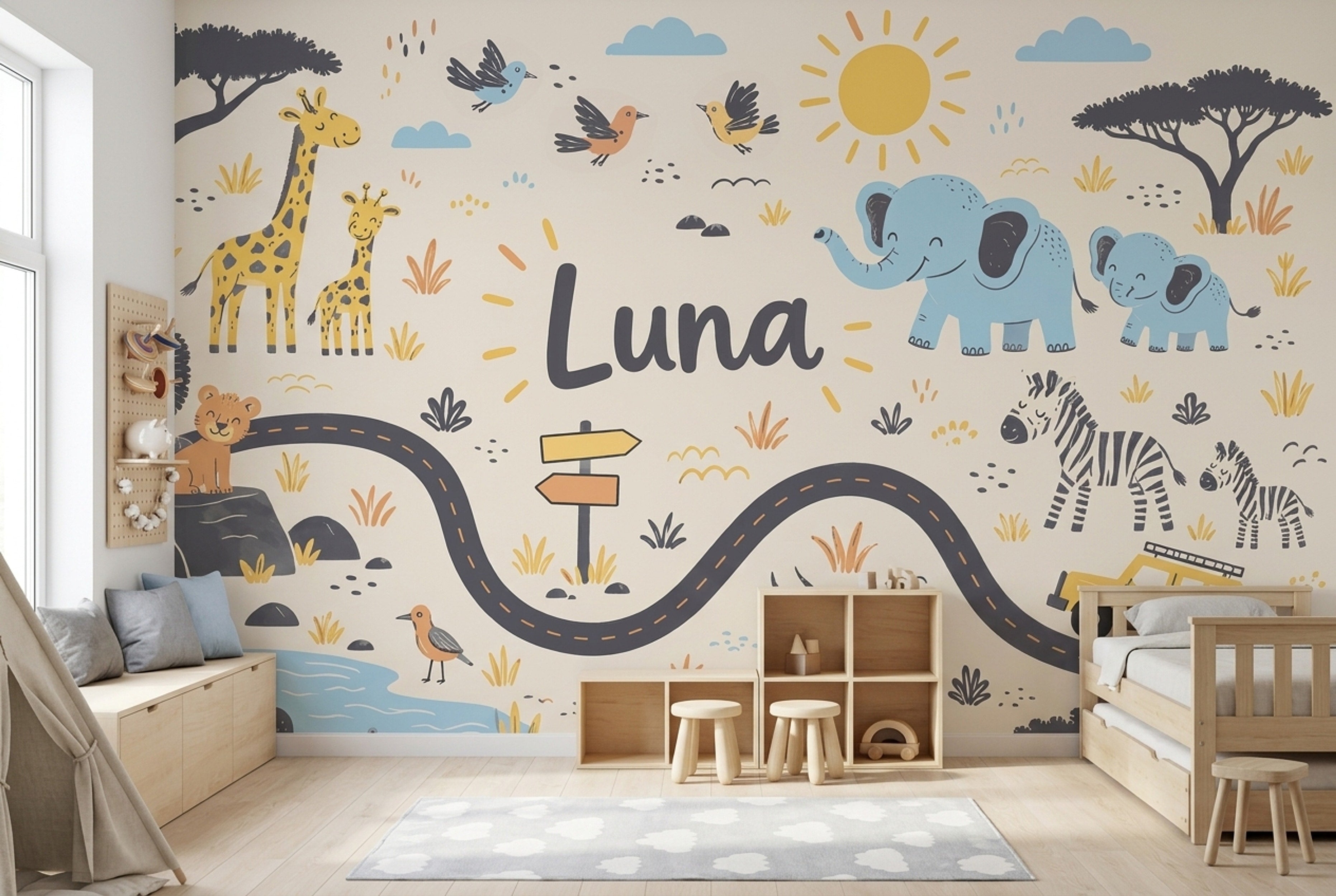
Safari Animals
From $3.72 / sq ft -
wall mural
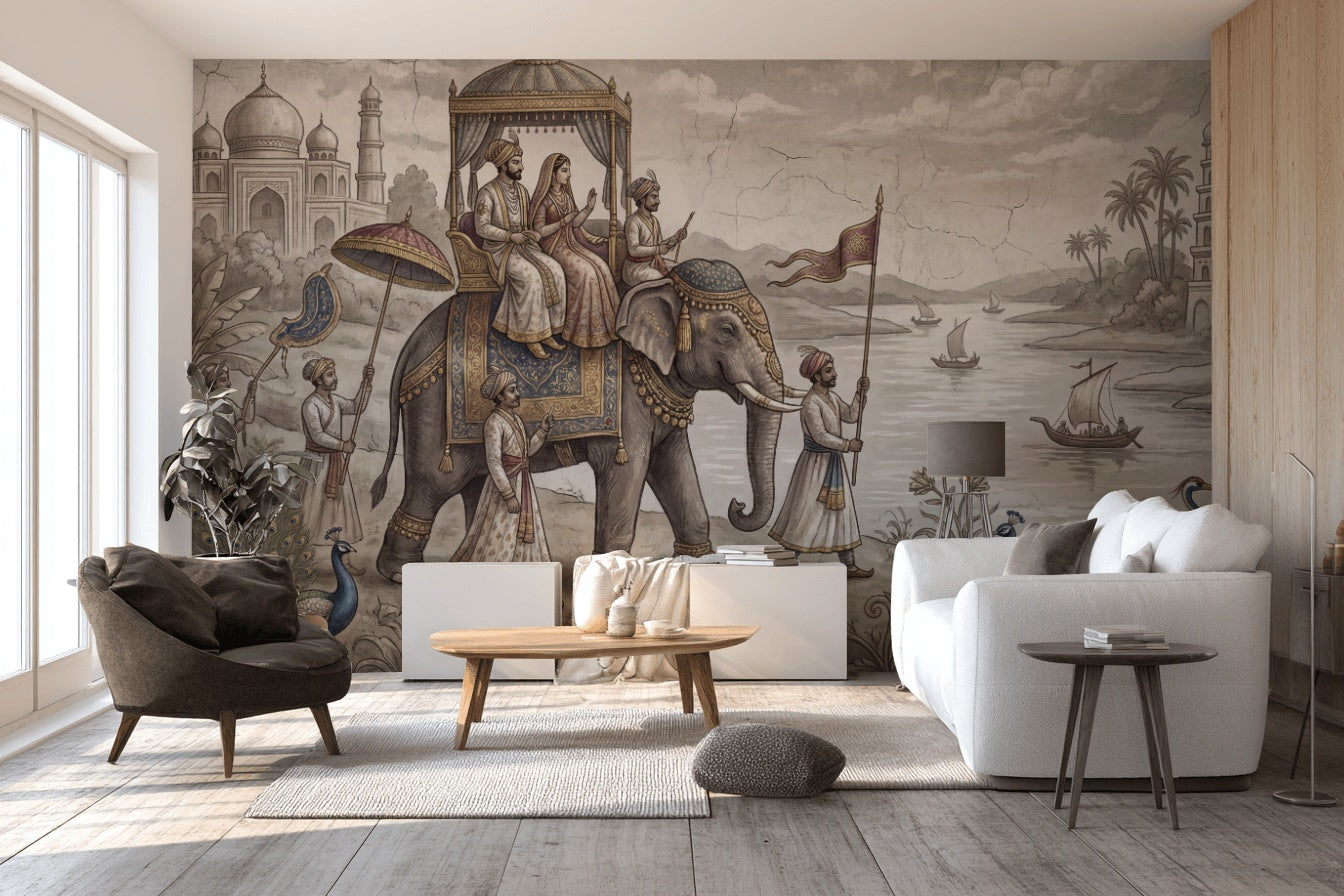
Mughal Procession
From $3.72 / sq ft -
wall mural
Safari Animals
From $3.72 / sq ft -
wall mural
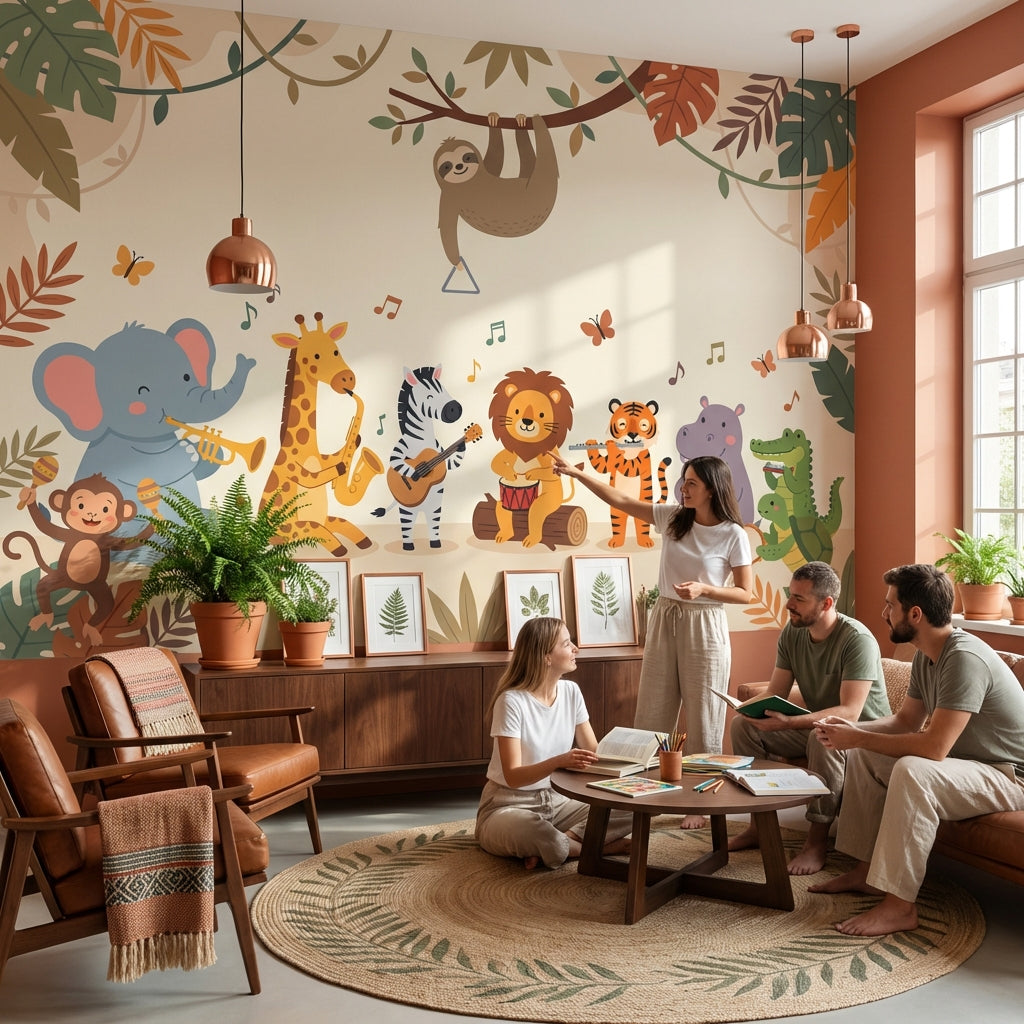
Jungle Animals
From $3.72 / sq ft -
wall mural
Landscape Wallpaper Pavilion
From $3.72 / sq ft -
wall mural
Tropical Jungle
From $3.72 / sq ft -
wall mural
Circus Animals
From $3.72 / sq ft -
wall mural
Jungle Wallpaper Wildlife
From $3.72 / sq ft -
wall mural
Elephant And
From $3.72 / sq ft -
wall mural
Watercolor Elephant
From $3.72 / sq ft -
wall mural
Pastel Townhouse
From $3.72 / sq ft -
wall mural
Safari Animals
From $3.72 / sq ft -
wall mural
Rainforest Animals
From $3.72 / sq ft -
wall mural
Watercolor Safari
From $3.72 / sq ft -
wall mural
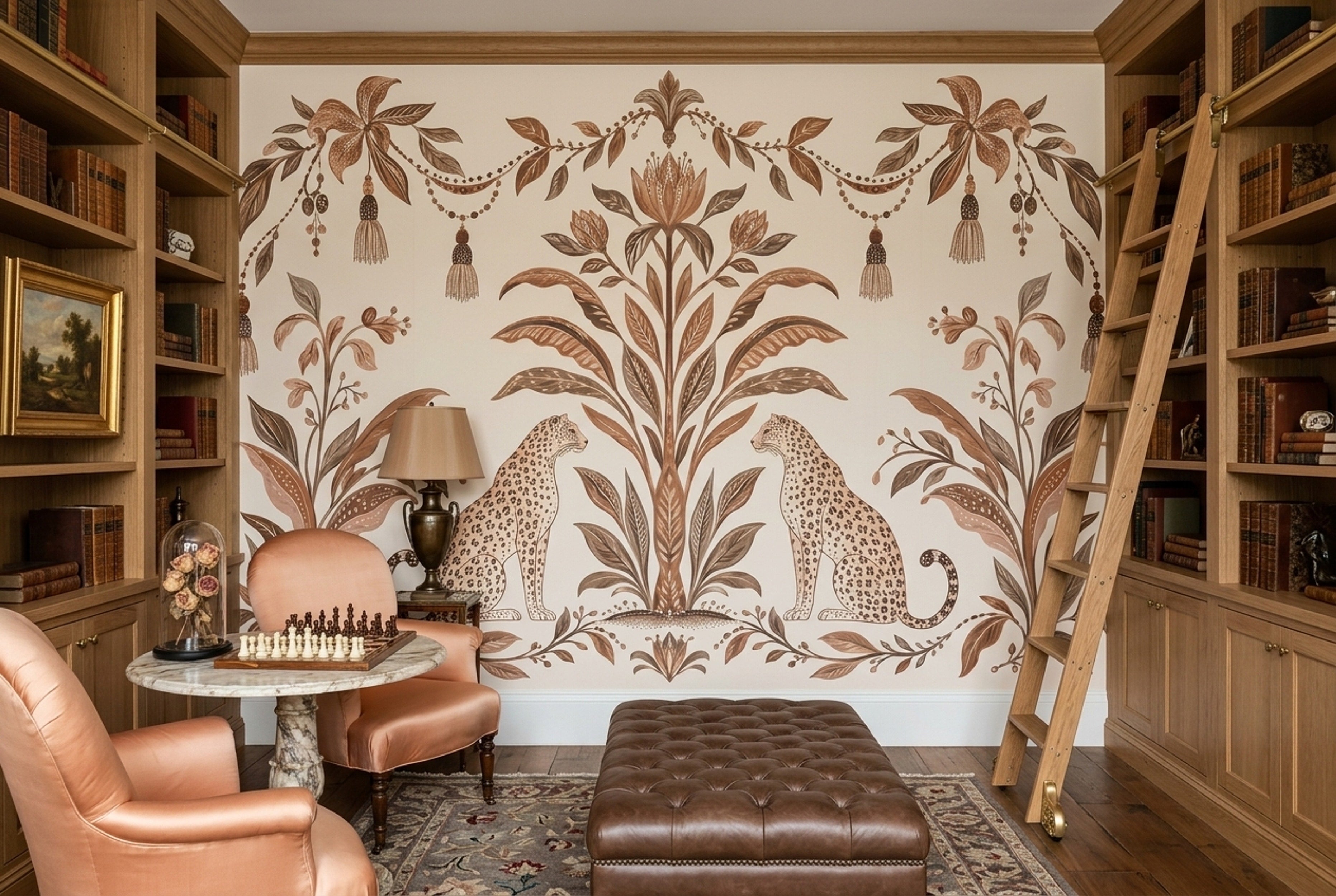
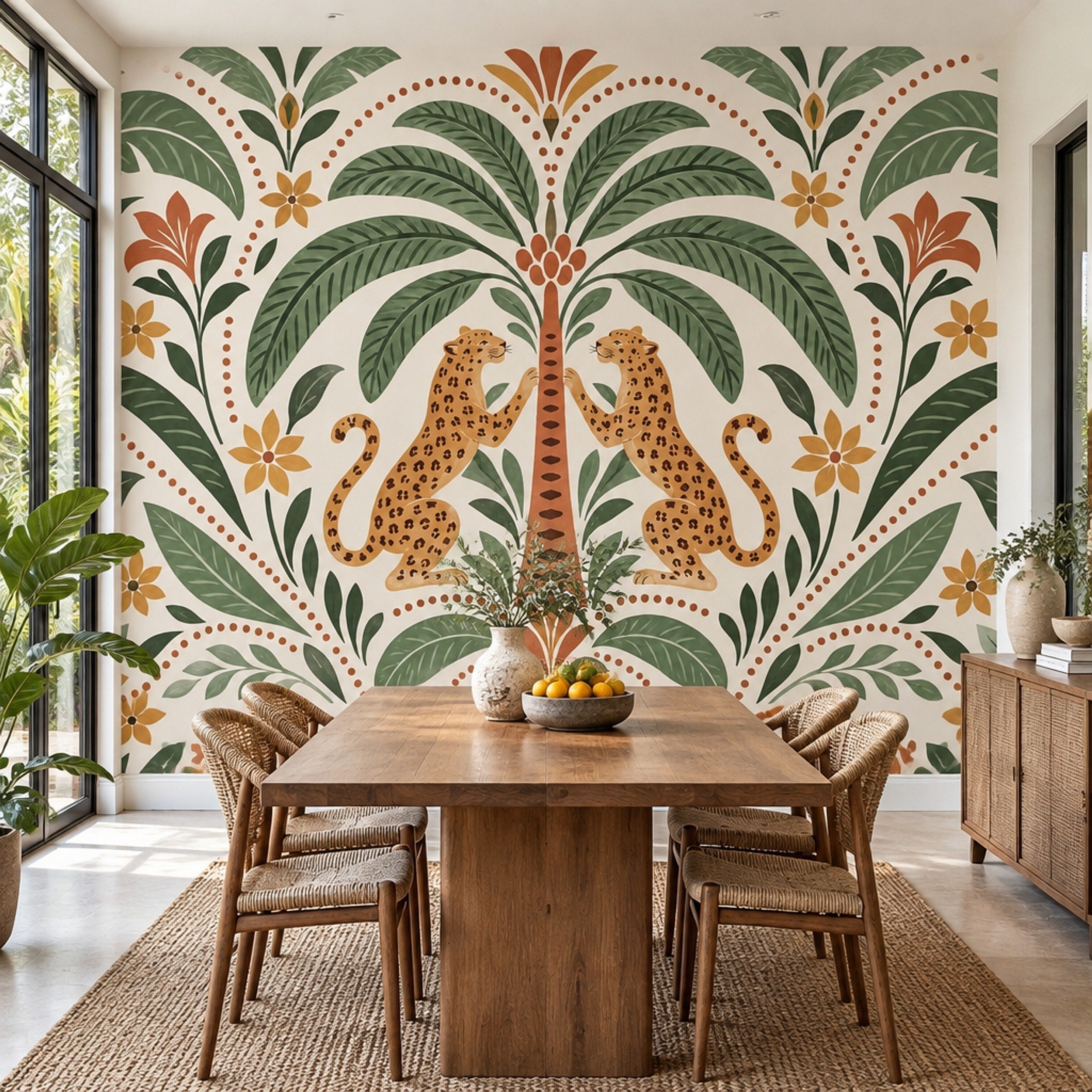
Symmetrical Leopards
From $3.72 / sq ft -
wall mural
Cute Safari
From $3.72 / sq ft -
wall mural
Leopard Pair
From $3.72 / sq ft -
wall mural
Cheetah And
From $3.72 / sq ft -
wall mural
Tropical Jungle
From $3.72 / sq ft -
wall mural
Leopard Jungle
From $3.72 / sq ft






























48 / 372
Load more


— NEED HELP?
Frequently asked questions.
Can't find what you're looking for? Our team replies within 4 working hours, Mon–Fri.
01 How does custom sizing work for Safari Animals Wall Murals, and what measurements do I need for a clean fit around doors or sloped ceilings?
For Safari Animals Wall Murals, measure the full wall width and height in inches, then add 2–4 inches of “bleed” so the giraffe necks, palm fronds, or horizon lines don’t get trimmed tight at the edges. Note any obstacles (doors, windows, radiators, built-ins) with their distances from the nearest corner so key animals aren’t placed behind a headboard or wardrobe. If you have a sloped ceiling or stair wall, measure the tallest and widest points and share a quick sketch—this helps keep the main animal faces centered. Custom sizing is especially helpful for African safari wall murals with big focal subjects like elephants or lions.
02 Which room works best for Safari Animals Wall Murals, and where should I place them—accent wall, full room, or even the ceiling?
A nursery or kids’ room is the easiest win—safari wall murals for nursery work well on the wall behind the crib or changing table, keeping the animal faces at adult eye level (about 60–66 inches from the floor). In a playroom, go larger: a full-width mural on the longest wall makes “animals wall murals” feel like a scene rather than a sticker collage. For a small powder room, a single accent wall behind the vanity can handle more contrast, like deep jungle green with tan grasses. Ceiling use can work if the art is airy (cloudy sky or pale sand), but avoid dense jungle canopies overhead in low rooms.
03 Can Safari Animals Wall Murals be combined with other design styles—what looks current and what clashes?
Safari Animals Wall Murals pair well with modern organic (light oak, linen, matte black details) or a calm Scandinavian base, especially when the mural uses sandy beige, warm taupe, and olive green. For a more current twist, try a “3d safari wall murals” look with soft depth shading, then keep the rest of the room minimal so the scene reads intentional. What tends to clash: busy geometric rugs in high-contrast black-and-white competing with detailed animals, or heavy glam finishes like mirrored furniture next to jungle safari wall murals. If you love maximalism, keep it controlled—repeat one accent color from the mural (clay, ochre, or sage) across textiles.
04 What furniture materials, finishes, and textiles pair best with Safari Animals Wall Murals (specific items, not general categories)?
With Safari Animals Wall Murals, start with a natural oak or walnut dresser, a cane-front nightstand, and a matte black sconce to echo the mural’s linework. Textiles that read right: oatmeal linen curtains, a jute rug, and a camel or terracotta throw blanket that picks up savanna tones. For a nursery, add a boucle rocker in cream and a woven seagrass toy basket to keep the room grounded without copying the animal theme too literally. These choices work especially well with African safari wall murals where sand, grass, and sky tones are the main palette.
05 Why are Safari Animals Wall Murals trending in interior design right now, and what makes the newer versions feel modern?
The trend is leaning toward nature themes that feel calming, and Safari Animals Wall Murals fit that without needing loud colors—think muted sage, dusty khaki, and soft sky blue instead of primary tones. Modern versions often use watercolor washes, minimal outlines, or panoramic “savanna horizon” compositions, which read more like art than a kids-only motif. That’s why you’re seeing more “baby safari wall murals” and also safari animals wall mural designs used in home offices or reading nooks. Jungle safari wall murals are also trending when they’re toned down with foggy greens and lots of negative space.
06 Should I use Safari Animals Wall Murals on one accent wall or all walls, and how do I decide based on room size and pattern scale?
If the mural has large-scale animals (a full elephant, tall giraffes, or a wide savanna scene), one accent wall is usually best—especially in rooms under about 10' x 12'—so the composition stays readable. In larger rooms or open playrooms, wrapping two walls can work when the design is lighter (small animals, spaced trees, pale backgrounds) and you keep other surfaces simple. For dense foliage jungle safari wall murals, avoid all four walls unless the room has high ceilings and strong daylight; otherwise it can feel visually busy. A good rule: if you can’t step back at least 6–8 feet to view it, choose a single feature wall with the safari wall murals.