 Wallpaper
Lush Green
From $23
Wallpaper
Lush Green
From $23

On the wall behind a low oak bed in a north-facing bedroom, River Wallpaper reads as layered blue-green with cool slate, silvery mist, and a faint taupe unde...
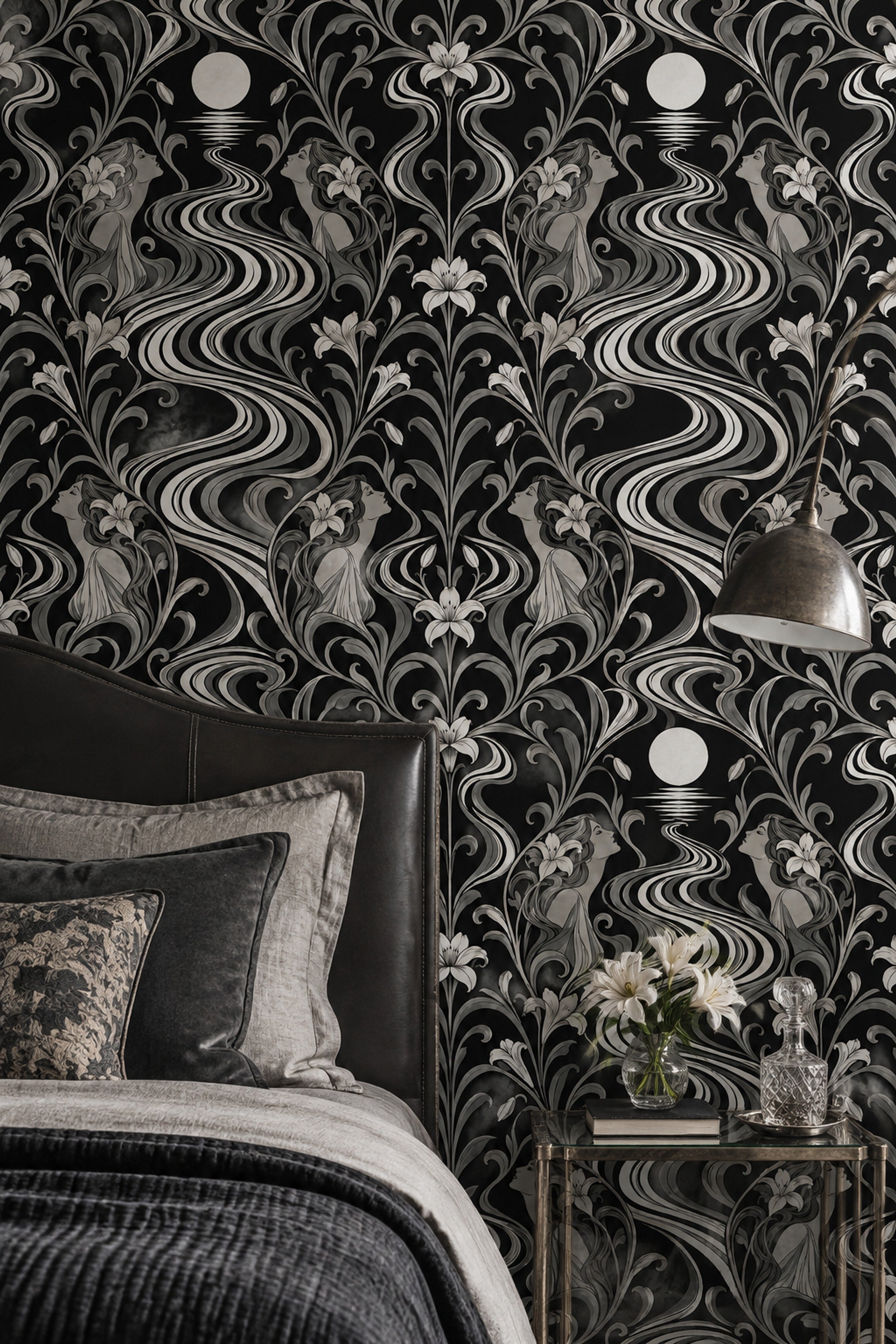
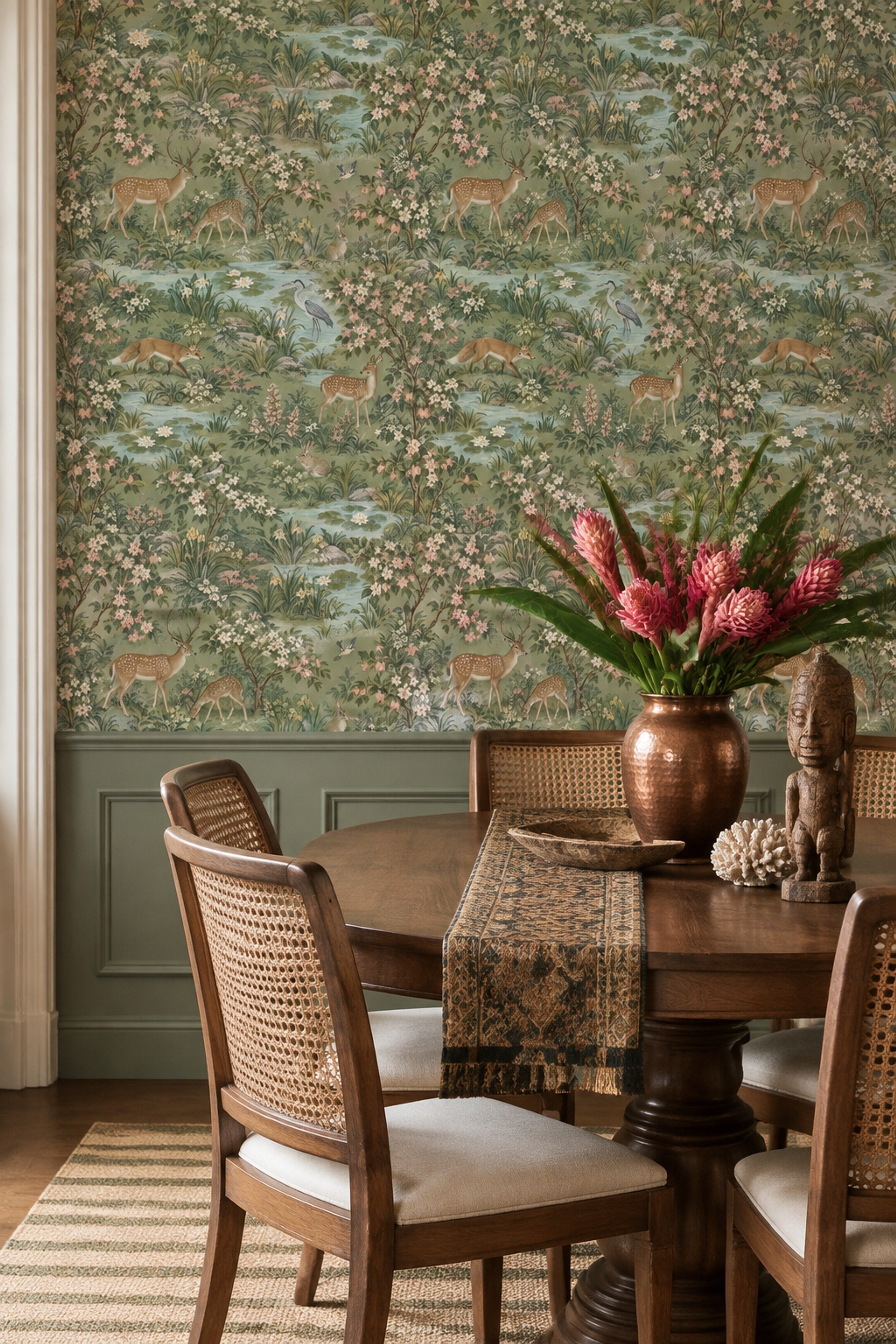
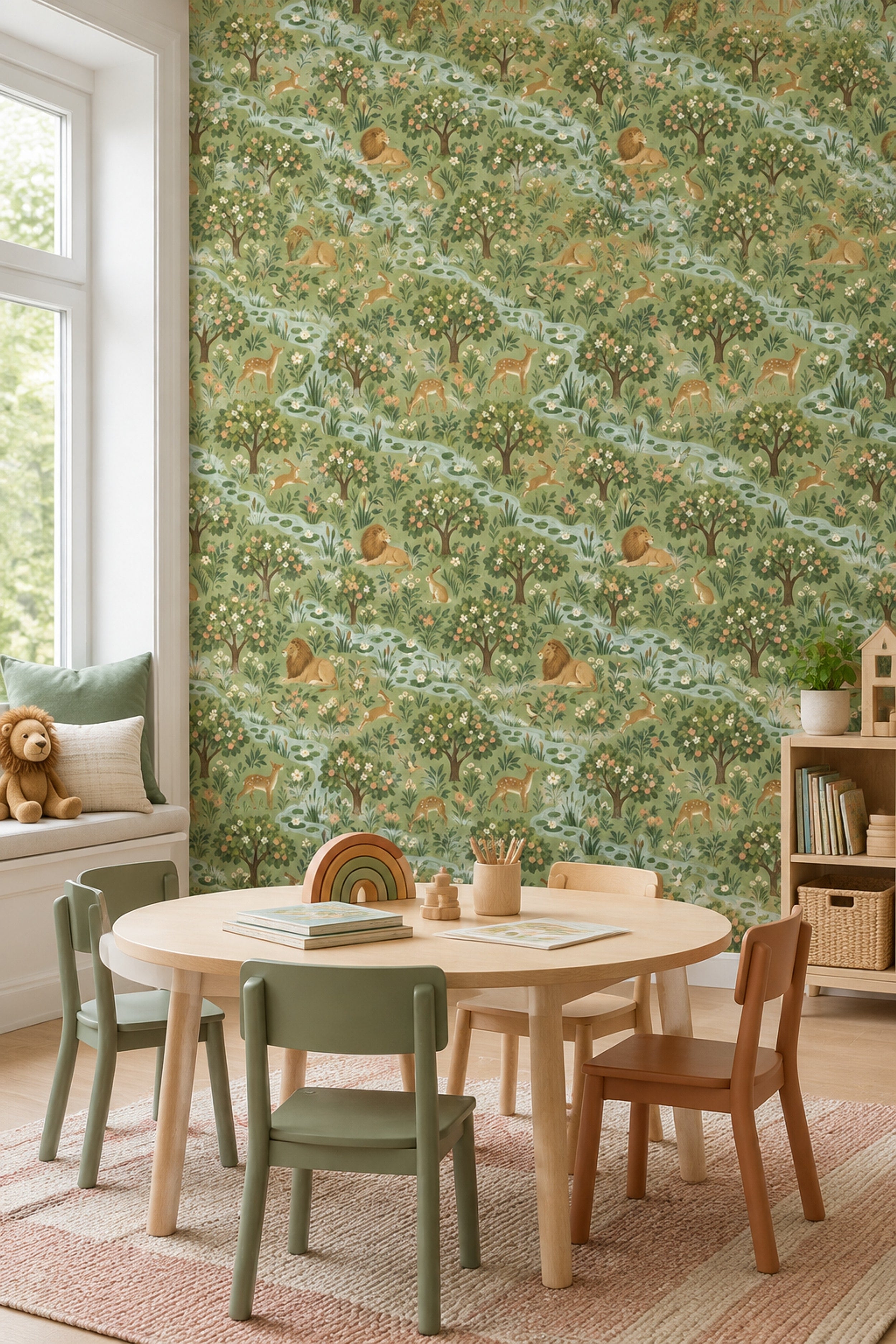
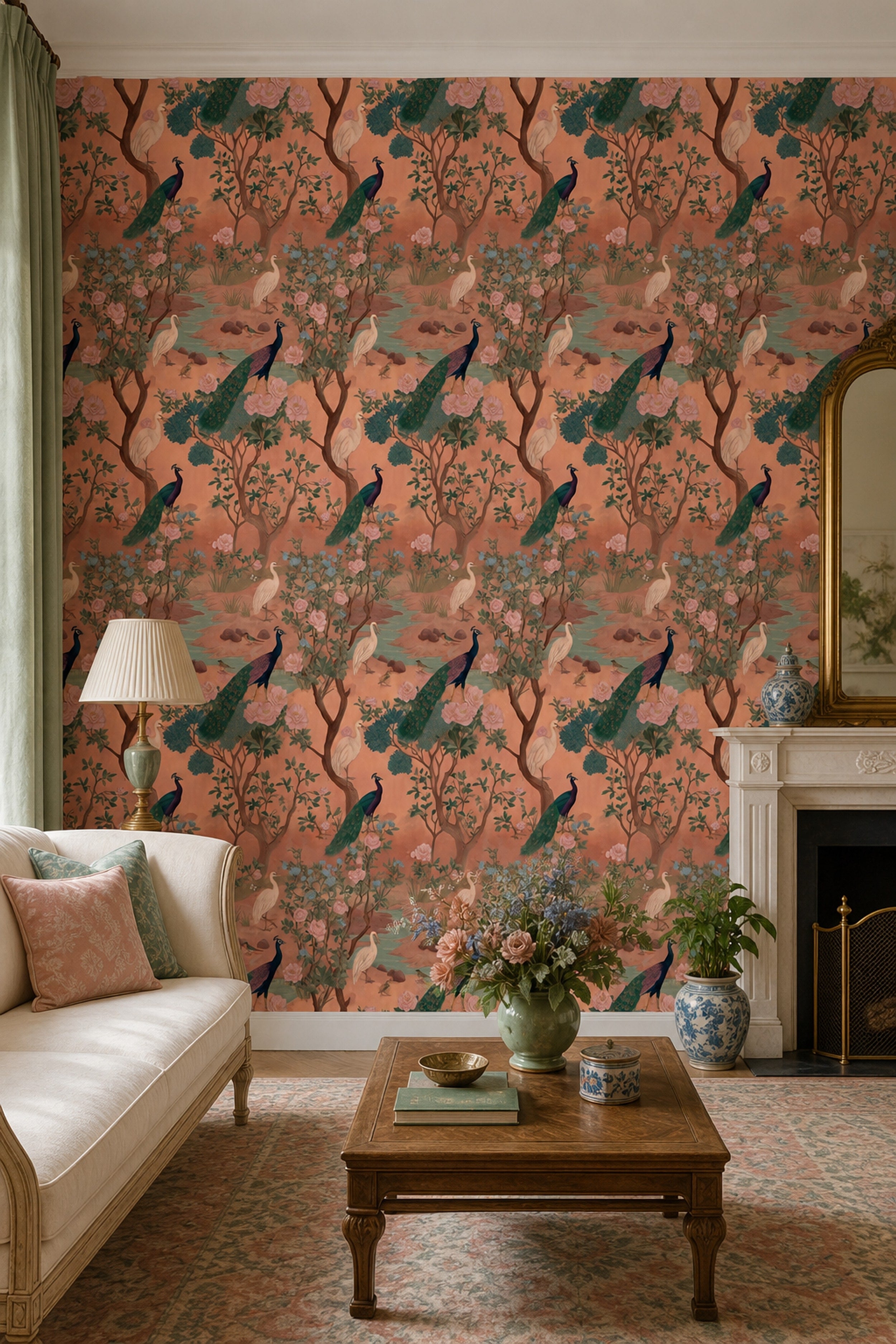
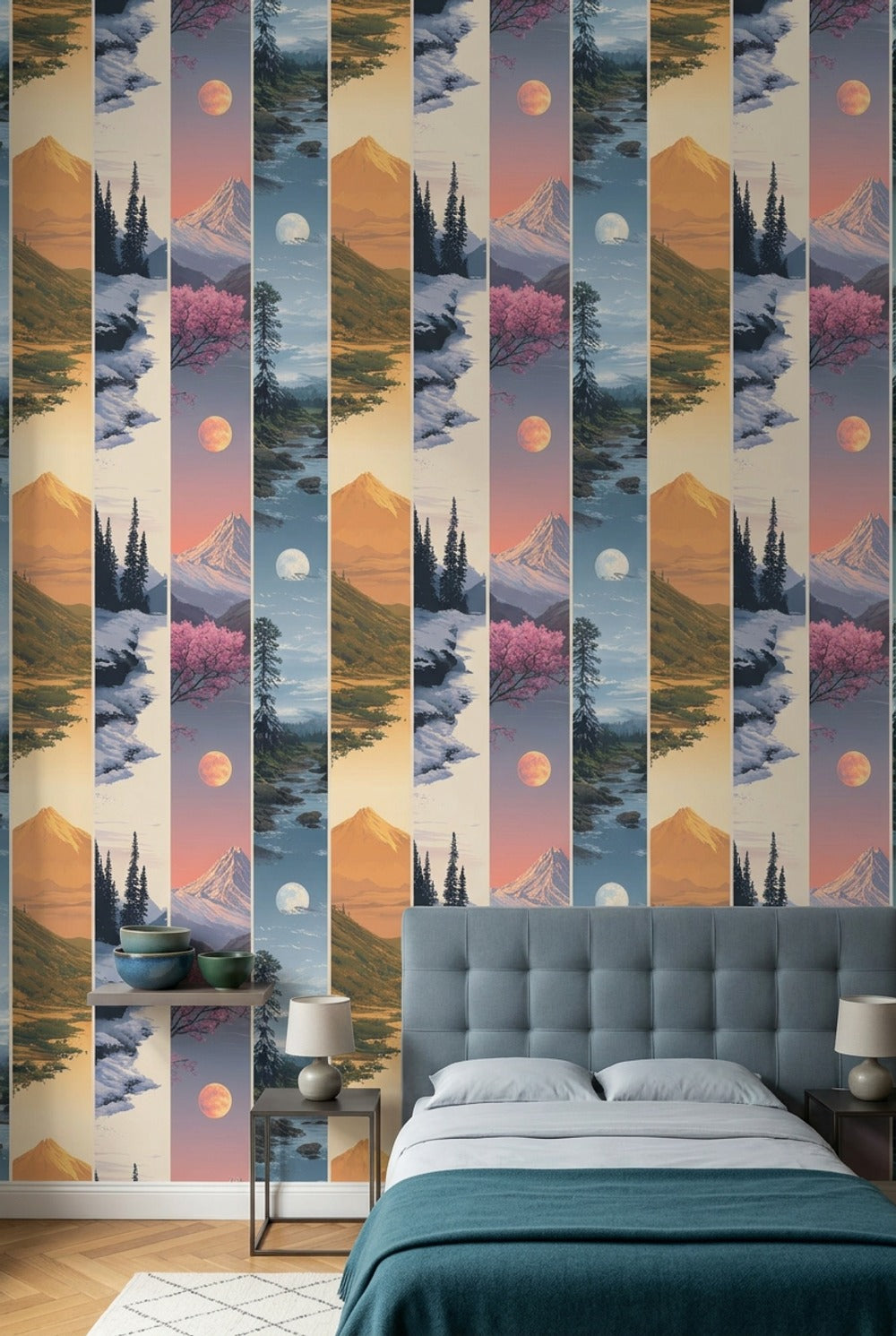
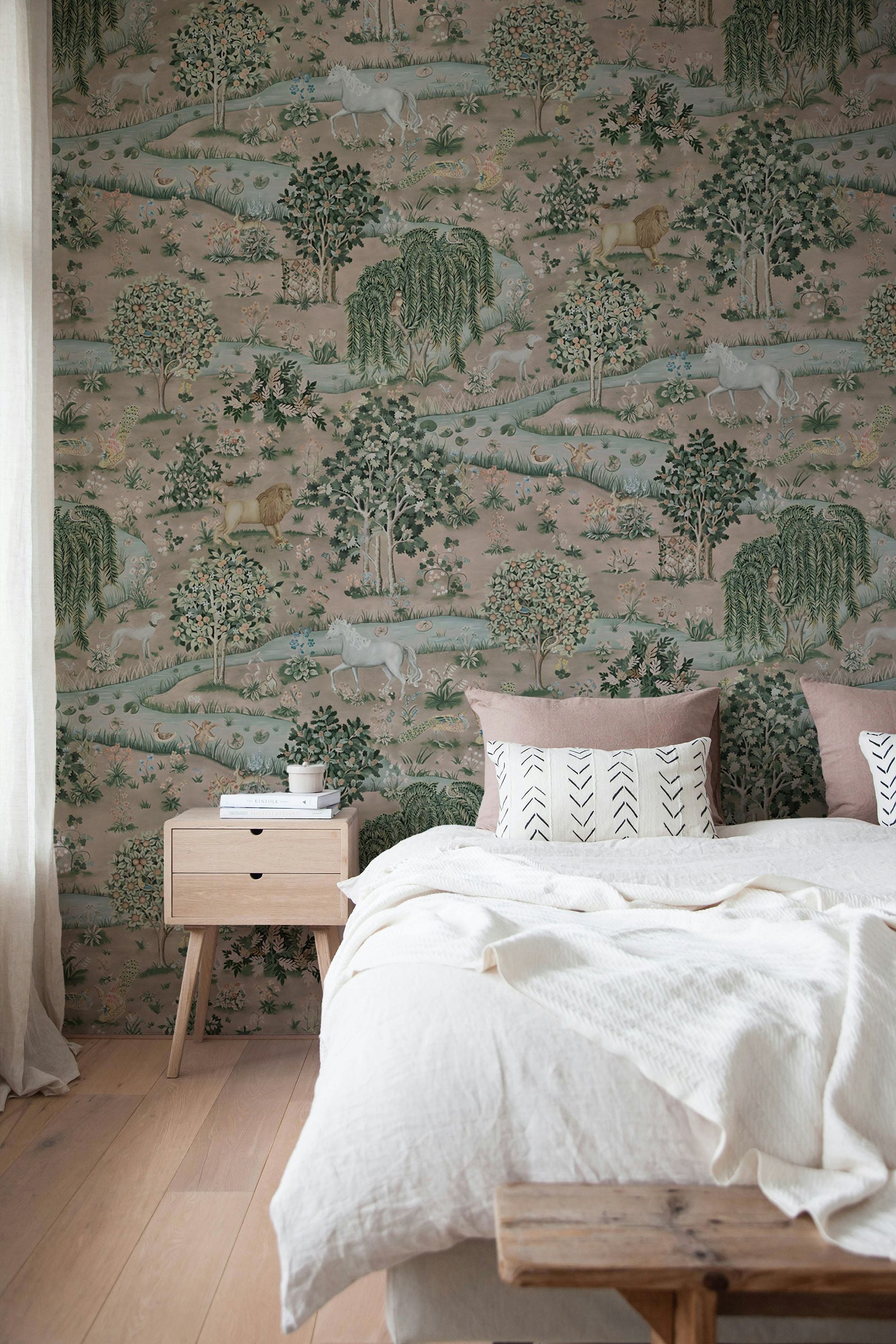
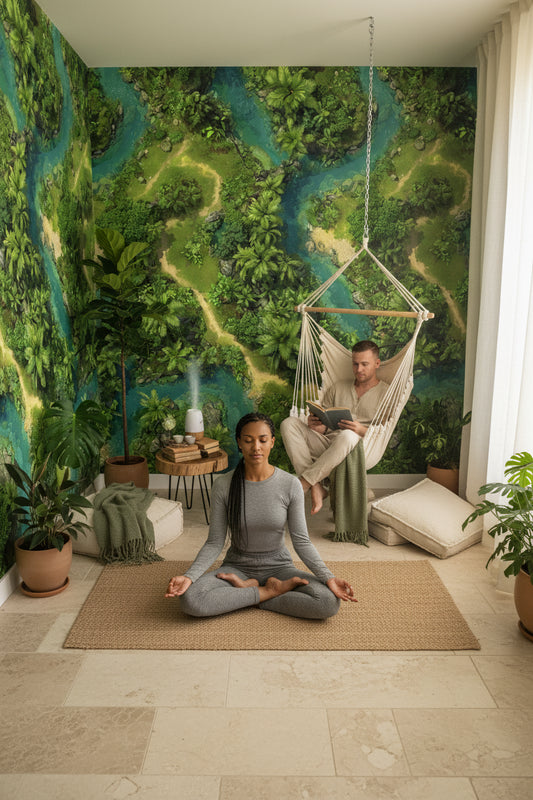
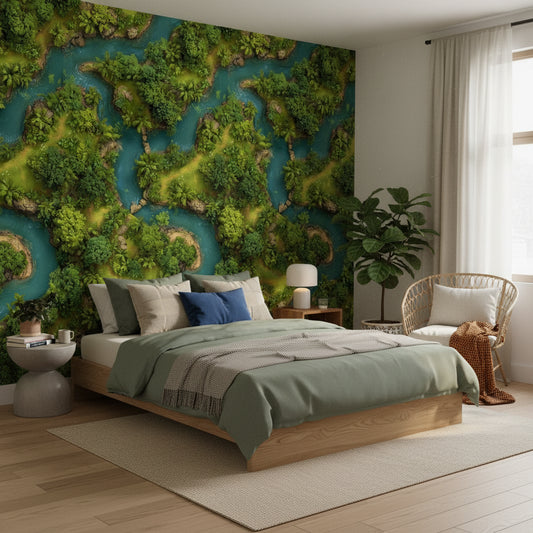
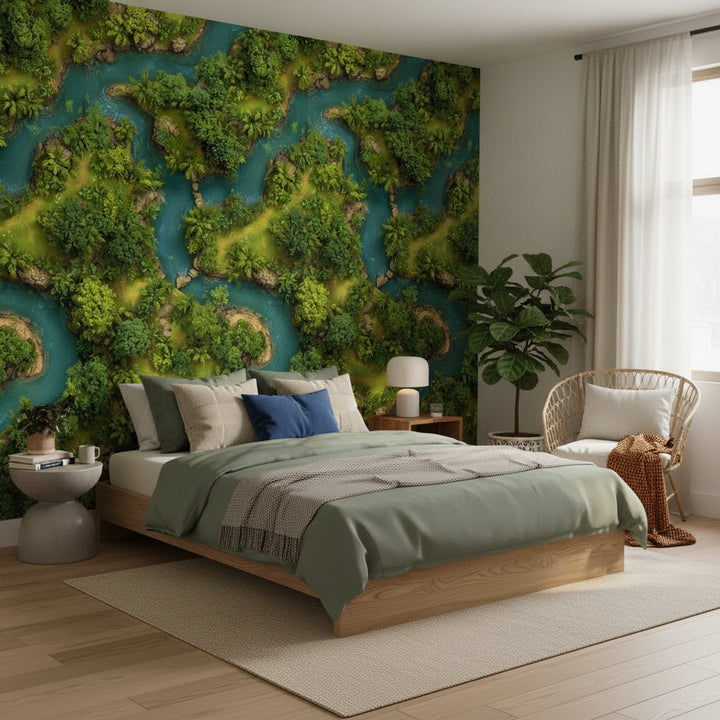
On the wall behind a low oak bed in a north-facing bedroom, River Wallpaper reads as layered blue-green with cool slate, silvery mist, and a faint taupe undertone that appears once daylight moves across the paper. In early morning, the pattern feels crisp and watery; by lamplight, River Wallpaper shifts warmer and the gray-beige notes become more visible against cream bedding and a charcoal wool throw. This is the kind of wallpaper for walls that gives a room direction without flattening the architecture, especially if you are already looking through Light Wallpaper for quieter color depth.
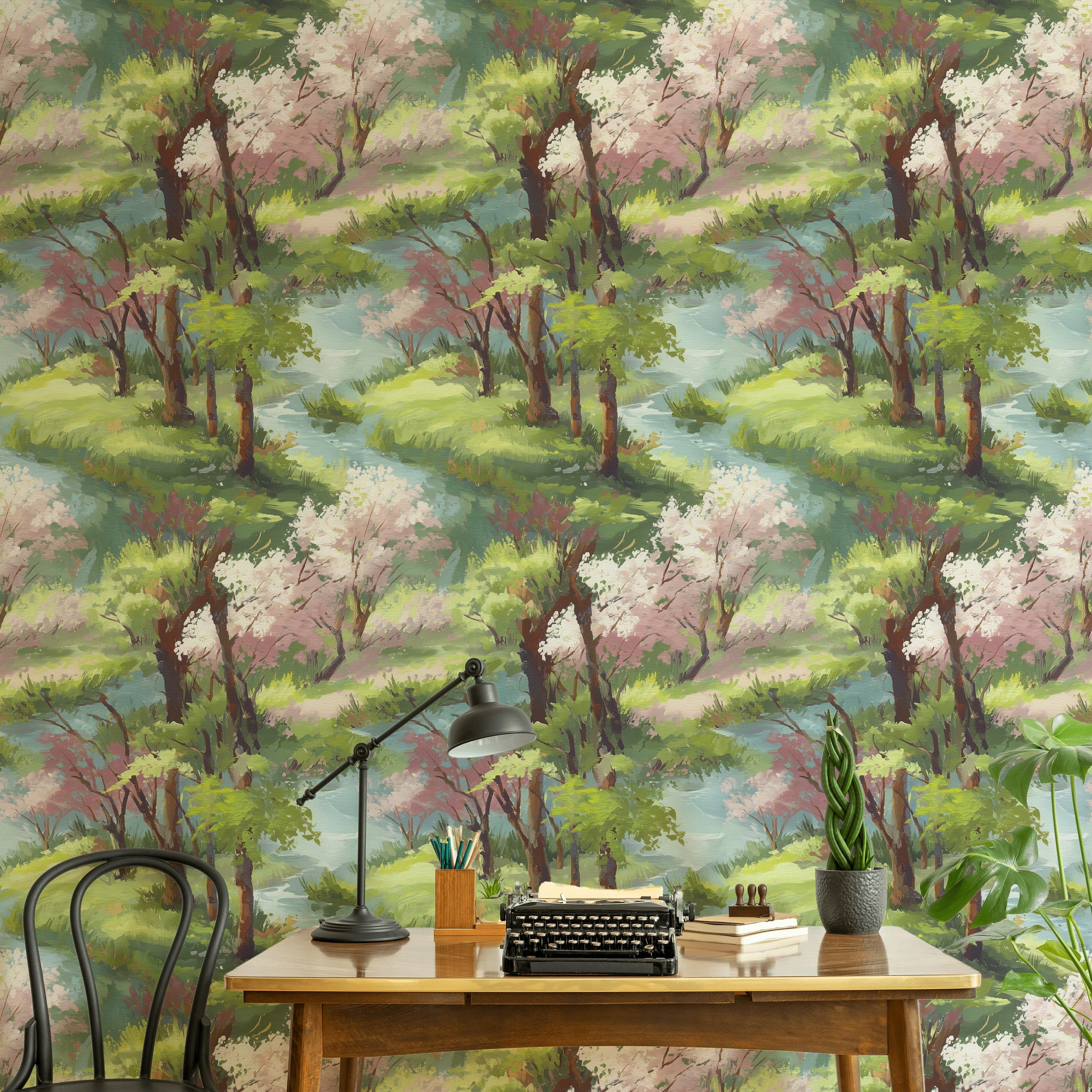
River Wallpaper stands out through its fluid linear movement, washed mineral texture, and layered undertones of deep teal, smoke blue, pebble gray, and muted sand rather than flat navy or plain aqua. That mix gives River Wallpaper a lively wallpaper effect on long wall spans, especially next to a walnut sideboard, an ivory boucle chair, or a linen sofa with rust cushions on a Living Room Wallpaper feature wall. If you want a larger-scale mural wallpaper interpretation of the same mood, see River Wall Murals for wallpaper murals that lean more panoramic.
In a living room, River Wallpaper has the strongest presence on the main wall behind a sofa or on the chimney breast between built-in shelves, where the horizontal flow can read clearly from across the room. In a kitchen, River Wallpaper works especially well on the breakfast nook wall beside painted shaker cabinets in warm white or mushroom, and our guide to Modern Wallpaper For Kitchen shows how to pair this look with blackened steel pendants and oak stools. For homes planning a statement seating area, the Statement Wallpaper For Living Room guide gives practical layout ideas, while our custom sizes, paste-the-wall install, peel and stick wallpaper options, and worldwide shipping make River Wallpaper easy to place in bedrooms, powder rooms, and even carefully chosen bathroom wallpaper settings.
Based on designs you explored, with fresh finds mixed in.
19 / 19
— NEED HELP?
Can't find what you're looking for? Our team replies within 4 working hours, Mon–Fri.
River Wallpaper usually reads as flowing, horizontal movement—think meandering lines, watercolor washes, or rippled gradients in shades like slate blue, mist gray, and moss green. Look for soft “current” patterns and layered tones rather than rigid stripes; that’s what gives it that riverbank feel. If the print includes reeds, stones, or reflective highlights, it will feel more landscape-inspired than geometric.
River Wallpaper works especially well with white oak or ash furniture, a walnut console, and matte black hardware to echo river stones. Add a linen sofa in oatmeal, a boucle accent chair in ivory, and a jute or flatweave rug to keep the palette grounded. For lighting, choose aged brass sconces or a glass globe pendant—those warmer metals balance the cooler water tones on wallpaper for walls.
River Wallpaper fits the current move toward nature-led interiors and quieter patterns—people want motion and texture without busy motifs. The modern take is tonal: ink-wash blues, foggy grays, and minimal linework instead of literal scenery. If you want a current look, choose a matte finish and pair it with simple silhouettes like a low-profile platform bed and a ribbed oak nightstand; it can still read as lively wallpaper without feeling loud.
In a small room (under about 10' x 12'), use River Wallpaper on one accent wall—behind the bed or sofa—especially if the pattern has high contrast or big “wave” shapes. In a larger room, wrapping all walls works best when the print is low-contrast (mist gray on pale blue) so it reads like texture, not a graphic. If you’re choosing peel and stick wallpaper, an accent wall is also a smart way to test the scale and movement before committing to the full room.
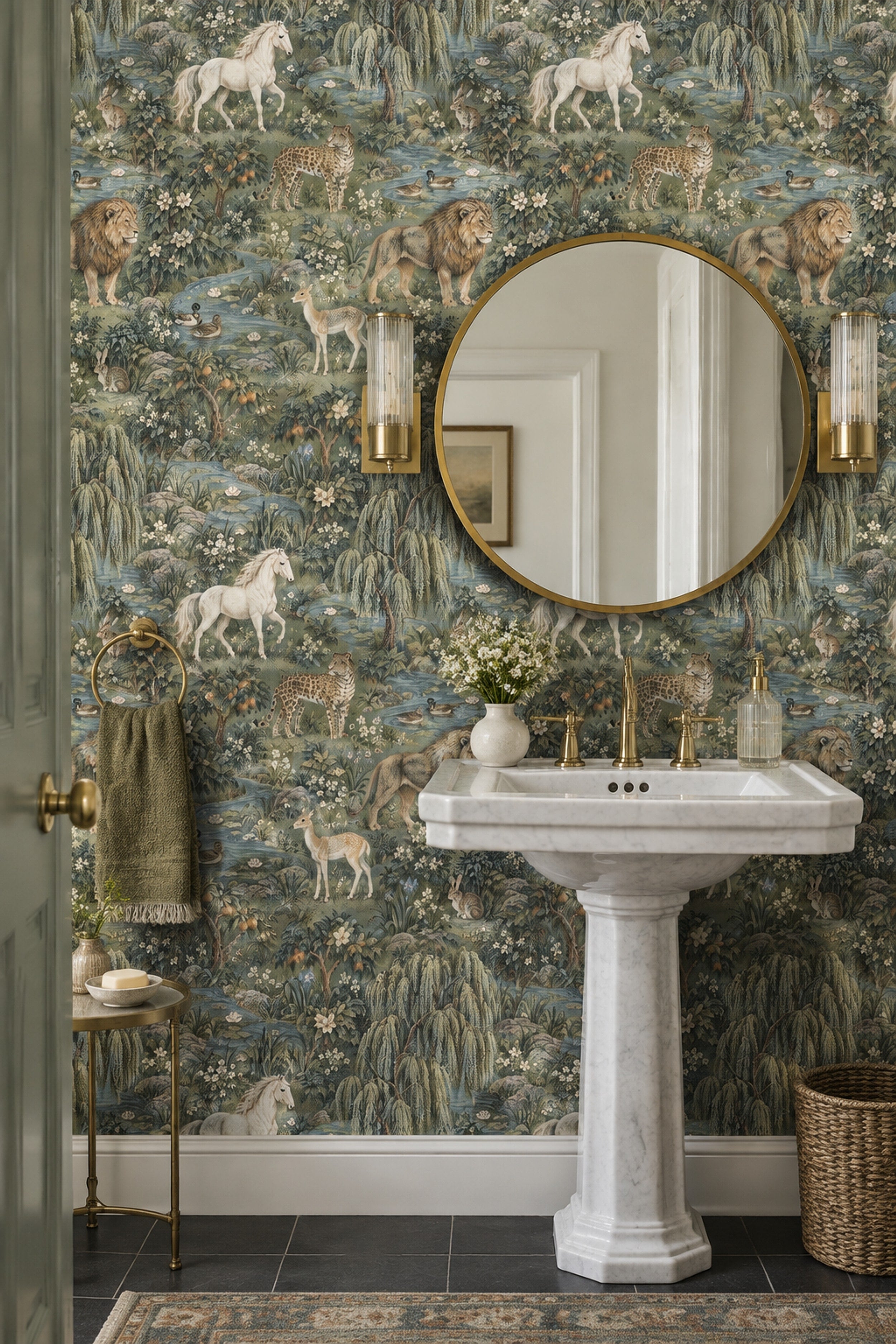
A powder room is a top pick—River Wallpaper adds depth in a small space, and it pairs well with a concrete or white quartz vanity and matte black faucet; just choose a design that can handle bathroom wallpaper conditions with proper ventilation. For placement, run it behind the mirror wall for a focused statement, or take it to the ceiling if the pattern is soft and watercolor-like. In a bedroom, the headboard wall is usually the cleanest placement because the “flow” reads calm rather than busy.
River Wallpaper blends nicely with Japandi (light oak, paper lantern pendants), coastal (bleached wood, rope details), and modern rustic (walnut, iron, linen). It can also sit next to botanical accents—just keep any floral wallpaper or floral wallpaper flowers to one small zone (like inside a closet nook) so the room doesn’t compete with the river movement. It tends to clash with high-gloss lacquer furniture and tight geometric patterns (chevrons, bold checkerboards) because they fight the organic flow.
The biggest mistake is mismatching undertones: a green-leaning river print can look off next to a red-leaning oak floor—pull a paint chip in sage vs. blue-gray before ordering. Another is pairing it with too many competing textures (busy terrazzo, heavy veining marble, and bold art all at once); let the River Wallpaper be the main movement and keep countertops and textiles quieter. If you’re considering peel and stick wallpaper on wallpaper, avoid it over heavily embossed existing paper—river patterns show bumps more than you’d expect.
VISUAL SEARCH
Upload a reference image and discover visually similar designs.
BEST MATCHES
PERSONALIZED DISCOVERY
Describe a look or let your room lead the search.
CURATED FOR YOU
The chat is taking longer than usual.
Email support@muralls.com